
Tetracis jubararia
Hulst, 1886
October thorn moth, October Thorn
Tetracis jubararia is a geometrid known as the October thorn moth. It occurs in western North America with two recognized occupying distinct elevational zones. fly in late summer and autumn. Larvae feed on a diverse range of woody plants including both angiosperms and conifers.
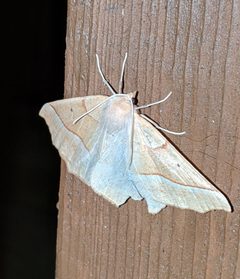
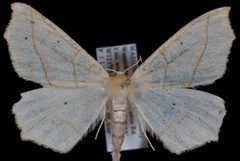
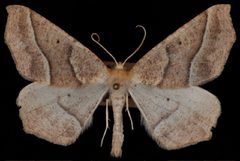
Pronunciation
How to pronounce Tetracis jubararia: /ˈtɛtrəsɪs ˌdʒuːbərˈeɪriə/
These audio files are automatically generated. While they are not always 100% accurate, they are a good starting point.
Identification
The jubararia and the October thorn distinguish this within the . Two are recognized: T. j. jubararia (lower elevations, 150–2255 m) and T. j. sericeata (higher elevations, 1830–2590 m in Rocky Mountain and Intermountain regions). of the two subspecies show partially non-overlapping periods that may aid identification. For definitive identification, reference to the species descriptions and illustrations of adults and genitalia in the 2010 revision (Ferris & Schmidt, Zootaxa 2347) is necessary.
Images
Appearance
Medium-sized geometrid . The forewings are relatively broad. Specific coloration and pattern details are not provided in available sources; the formerly presumed lost was located and illustrated in the 2010 taxonomic revision.
Habitat
jubararia: elevations from 150 to 2255 meters. Subspecies sericeata: elevations from 1830 to 2590 meters in Rocky Mountain and Intermountain regions. Specific types (forest, shrubland, etc.) are not detailed in available sources.
Distribution
Western North America. jubararia: southern California northward to British Columbia and eastward to central Saskatchewan, southwestern Idaho, and White Pine County, Nevada. Subspecies sericeata: Rocky Mountain and Intermountain Regions.
Seasonality
of jubararia: mid August to late November depending on locality and elevation. Adults of subspecies sericeata: September to mid November.
Diet
Larvae feed on foliage of woody plants. Recorded plants include: Alnus (alders), Betula (birches), Cornus (dogwoods), Populus (poplars), Ribes (currants/gooseberries), Prunus subcordata (Klamath plum), Salix (willows), Picea glauca (white spruce), Picea engelmannii (Engelmann spruce), Pseudotsuga menziesii (Douglas-fir), and Thuja (arborvitae/incense-cedar).
Host Associations
- Alnus - larval food plant
- Betula - larval food plant
- Cornus - larval food plant
- Populus - larval food plant
- Ribes - larval food plant
- Prunus subcordata - larval food plant
- Salix - larval food plant
- Picea glauca - larval food plant
- Picea engelmannii - larval food plant
- Pseudotsuga menziesii - larval food plant
- Thuja - larval food plant
Similar Taxa
- Other Tetracis speciesThe Tetracis contains thirteen North American . T. jubararia can be distinguished from using the key and illustrations in Ferris & Schmidt (2010), which includes descriptions of and genitalia.
More Details
Taxonomic history
The Synaxis was synonymized with Tetracis in 2010, resulting in this being known previously as Synaxis jubararia. The of T. jubararia, formerly presumed lost, was located and illustrated in the revision by Ferris & Schmidt (Zootaxa 2347: 1-33).
Subspecies
Two are recognized with distinct elevational ranges and partially separated periods, suggesting to different climatic conditions across the ' range.