
Tetracis cachexiata
Guenée, [1858]
White Slant-line, White Slaut
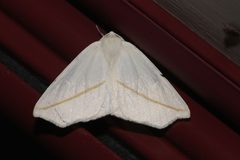
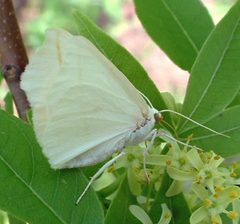
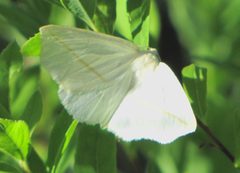
A medium-sized geometrid with white wings marked by a slanted transverse line. are active in late spring and early summer across much of North America. The exhibits broad polyphagy, with larvae feeding on diverse woody plants including both angiosperms and conifers.
Pronunciation
How to pronounce Tetracis cachexiata: //ˈtɛtɹəsɪs kækˈsiːɑːtə//
These audio files are automatically generated. While they are not always 100% accurate, they are a good starting point.
Identification
Distinguished from other Tetracis and similar white geometrids by the single prominent slanted line (not multiple lines or bands). The specific epithet 'cachexiata' refers to this slanted appearance. Distinguished from the related Synaxis species (now synonymized under Tetracis) by wing pattern details and genitalia. May be confused with other 'slant-line' in the region, but the combination of pure white ground color and single sharp slant is characteristic.
Images
Appearance
Forewing length 19–26 mm. Wings predominantly white with a distinct slanted dark line crossing both forewings and hindwings. The slant-line pattern is the primary visual characteristic. Body relatively slender, typical of Geometridae. Resting posture with wings held flat or slightly overlapping.
Habitat
Associated with deciduous and mixed forests, woodlands, and areas supporting the larval plants. Found in ranging from eastern hardwood forests to western montane and regions.
Distribution
North America: Nova Scotia to central British Columbia, south to northern Florida, west to Montana and northern Colorado. Canadian provinces include Alberta, Manitoba, and Saskatchewan. Absent from the southern United States and most of the Great Plains.
Seasonality
active from May to early July. Single brooded () in most of range.
Diet
Larvae feed on diverse woody plants: Alnus (alders), Betula (birches), Prunus (cherries, plums), Salix (willows), Tilia (basswoods), Ulmus (elms), Viburnum (viburnums), Abies (firs), Larix (larches), Pinus (pines), and Tsuga (hemlocks). Both angiosperm and gymnosperm are utilized.
Life Cycle
Complete with , larva, pupa, and stages. Larvae are the feeding stage; specific site not documented in sources. stage not specified in available sources.
Behavior
are and attracted to light. Larval not documented beyond feeding habits.
Ecological Role
Larval herbivore on woody plants; contributes to nutrient cycling in forest . Broad range suggests ecological role rather than tight coevolutionary relationships.
Human Relevance
No significant economic impact documented. Occasionally encountered by naturalists and enthusiasts. Scientific interest in taxonomic revision of the Tetracis.
Similar Taxa
- Other Tetracis speciesShare and general appearance; distinguished by wing pattern details, particularly number and orientation of transverse lines
- Former Synaxis species (now Tetracis)Historically separated now synonymized; distinguished by genitalia and subtle wing pattern differences
More Details
Taxonomic History
The Tetracis underwent significant revision, with Synaxis Hulst synonymized under Tetracis. Three new were described in this revision (referenced in external links).