
Eusarca confusaria
Hübner, [1813]
Confused Eusarca Moth, confused eusarca
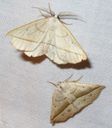
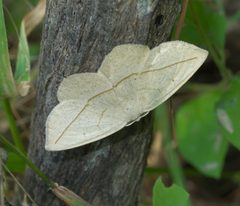
Eusarca confusaria, commonly known as the confused eusarca or confused eusarca , is a geometrid moth found across eastern North America. It is notable as the only member of its occurring in the northern United States and Canada. The species shows considerable color variation in , ranging from pale yellow-tan to dark grayish forms. Its larvae feed on a variety of herbaceous plants including asters, clover, dandelions, and goldenrod.
Pronunciation
How to pronounce Eusarca confusaria: //juːˈsɑːrkə kənˈfjuzɛəriə//
These audio files are automatically generated. While they are not always 100% accurate, they are a good starting point.
Identification
Distinguished from similar geometrid moths by combination of size, color variability, and geographic range. Easily confused with Eusarca fundaria (dark-edged eusarca), which has more consistent dark wing margins; Patalene olyzonaria (juniper geometer), associated with coniferous ; Eutrapela clemataria (curve-toothed geometer), which shows more pronounced wing angulation; Prochoerodes lineola (large maple spanworm), generally larger with different wing shape; and Oreta rosea (rose hooktip), which possesses distinctive hooked forewing tips absent in E. confusaria.
Images
Habitat
Meadows and fields containing larval plants. Open herbaceous environments rather than forested areas.
Distribution
Eastern North America from Nova Scotia south to Florida, west to Texas and Saskatchewan. Also recorded from Brazil. The only Eusarca in the northern United States and Canada.
Seasonality
active from April to October. Single period throughout range.
Diet
Larvae feed on asters (Asteraceae), clover (Fabaceae), dandelions (Asteraceae), and goldenrod (Asteraceae). feeding habits not documented.
Host Associations
- asters - larval food plantAsteraceae
- clover - larval food plantFabaceae
- dandelions - larval food plantTaraxacum, Asteraceae
- goldenrod - larval food plantSolidago, Asteraceae
Life Cycle
One per year. Larval stage feeds on herbaceous vegetation; and stage not described in available sources.
Ecological Role
Larval herbivore on common meadow plants; specific ecological functions (pollination, prey base) not documented.
Human Relevance
Occasional subject of interest for lepidopterists and naturalists due to identification challenges. No economic significance documented.
Similar Taxa
- Eusarca fundariaSimilar size and pattern; distinguished by more consistent dark wing margins versus variable smudging in E. confusaria
- Patalene olyzonariaOverlapping range and appearance; associated with juniper and coniferous rather than meadows
- Eutrapela clematariaSimilar coloration; distinguished by more angular wing margins and different season
- Prochoerodes lineolaLarger size with different wing proportions; associated with maple and other broadleaf trees
- Oreta roseaSimilar color forms; immediately distinguished by hooked forewing tips, a trait absent in Eusarca
More Details
Taxonomic significance
The only member of Eusarca occurring in northern North America; most restricted to southern regions
Observation frequency
Well-represented in citizen science databases with over 17,000 iNaturalist observations, reflecting both its abundance and the identification challenges it presents