
Eutrapela clemataria
(Smith, 1797)
Curved-toothed Geometer Moth, Curve-toothed Geometer Moth, Purplish-brown Looper
Eutrapela clemataria is a multivoltine geometrid native to North America. It is the sole in the Eutrapela. The species is notable as a for the thelyotokous Ooencyrtus ennomophagus, and its eggs have been used in mass rearing programs for . Cooling eggs to −10°C has been demonstrated to maintain their suitability for parasitoid production even after embryonation begins.
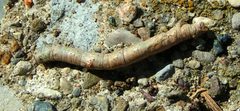
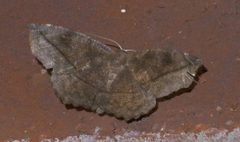
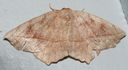
Pronunciation
How to pronounce Eutrapela clemataria: /juː.trəˈpiː.lə ˌklɛˈmæt.ə.ri.ə/
These audio files are automatically generated. While they are not always 100% accurate, they are a good starting point.
Images
Habitat
Deciduous and mixed woodlands.
Distribution
North America, from Nova Scotia south to Florida, west to Texas, and north to Saskatchewan. Documented in Canadian provinces: Alberta, Manitoba, Saskatchewan; and US state: Vermont.
Host Associations
- Ooencyrtus ennomophagus - Thelyotokous that parasitizes E. clemataria ; used in mass rearing programs for
Life Cycle
Multivoltine, producing multiple per year.
Ecological Role
Serves as for the Ooencyrtus ennomophagus; utilized in mass rearing programs.
Human Relevance
are used in mass rearing of the Ooencyrtus ennomophagus for purposes. Cold storage of eggs at −10°C has been developed to improve parasitoid production .
More Details
Parasitoid Rearing Significance
Research has demonstrated that cooling E. clemataria to −10°C alters them in ways that forestall the typical decline in production that occurs with egg age. This allows mass rearing of Ooencyrtus ennomophagus even after embryonation has begun, which is normally a limiting factor for production.