
Prochoerodes lineola
(Goeze, 1781)
Large Maple Spanworm Moth, Large Maple Spanworm
Prochoerodes lineola, commonly known as the large maple spanworm , is a geometrid moth native to North America. have a wingspan of 35–50 mm and are active from April to October in southern regions and July to September in northern areas. The caterpillars are feeders known to consume leaves from numerous woody and herbaceous plants. The occurs from Nova Scotia to Florida, west to Texas and north to Alberta.
Pronunciation
How to pronounce Prochoerodes lineola: /proʊˈkɔɪroʊdiːz lɪniˈoʊlə/
These audio files are automatically generated. While they are not always 100% accurate, they are a good starting point.
Identification
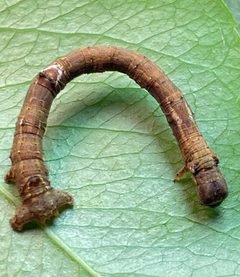
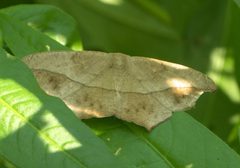
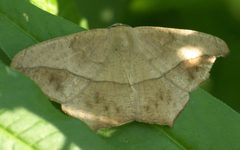
can be recognized by the combination of medium size (35–50 mm wingspan), pale forewings with fine wavy transverse lines, and a distinct discal spot. The overall pattern is relatively subdued compared to many other geometrids. Caterpillars are identified by their looping movement and feeding on diverse plants. Similar in the Prochoerodes and related geometrids may require examination of genitalia or molecular markers for definitive identification.
Images
Appearance
have a wingspan of 35–50 mm. The forewings are typically pale with fine, wavy transverse lines and a distinct discal spot. Wing coloration varies from light tan to grayish-brown with darker markings. The body is relatively slender, typical of geometrid moths. Caterpillars are elongate, slender loopers with reduced , moving with a characteristic looping gait.
Habitat
Occurs in diverse wooded and semi-open including deciduous forests, forest edges, riparian corridors, and suburban areas where plants are present. Found from sea level to moderate elevations across its broad North American range.
Distribution
Native to North America. Range extends from Nova Scotia south to Florida, west to Texas, and north to Alberta. Present throughout eastern and central United States and southern Canada.
Seasonality
are on wing from April to October in the southern part of the range, and from July to September in northern regions. Multiple likely occur in warmer areas.
Diet
Larvae feed on leaves of a wide range of plants including apple (Malus), birch (Betula), blueberry (Vaccinium), cherry (Prunus), currant (Ribes), geranium (Geranium), grasses (Poaceae), maple (Acer), oak (Quercus), poplar (Populus), soybean (Glycine max), sweetfern (Comptonia), walnut (Juglans), and willow (Salix). feeding habits are not documented in available sources.
Life Cycle
Complete with , larval, pupal, and stages. Larvae are the feeding stage and develop through multiple instars before pupating. Specific details of site and stage are not documented in available sources.
Behavior
are and attracted to light. Larvars exhibit characteristic looping locomotion due to reduced number of . Specific mating , patterns, or other behavioral details are not documented in available sources.
Ecological Role
Larvae function as herbivores, consuming foliage of diverse woody and herbaceous plants. Their broad range suggests they play a role in nutrient cycling and energy transfer in deciduous forest and edge . They serve as prey for various and , including ichneumon wasps such as Coccygomimus sanguinipes.
Human Relevance
Occasional pest of apple, cherry, and soybean, though not considered a major agricultural pest. Caterpillars may cause minor defoliation in orchards and crops. are encountered by enthusiasts and at light-trapping events.
Similar Taxa
- Prochoerodes truxaliataCongeneric geometrid with similar size and wing pattern; distinguished by subtle differences in wing markings and genitalia
- Prochoerodes forficariaRelated geometrid with overlapping range; distinguished by wing shape and pattern details, and is a documented for Coccygomimus sanguinipes
- Other Geometridae in tribe BoarmiiniMany share similar cryptic coloration and looping caterpillars; require detailed examination for identification
More Details
Subspecies
Two are recognized: Prochoerodes lineola lineola and Prochoerodes lineola incurvata (Guenée, 1857)
Parasitoid associations
Documented as a for the ichneumon Coccygomimus sanguinipes (formerly Pimpla sanguinipes), a of caterpillars
Sources and further reading
- BugGuide
- Wikipedia
- GBIF taxonomy match
- iNaturalist taxon
- NCBI Taxonomy
- Like a Moth to a Flame: Moth Night at Bohart Museum of Entomology | Bug Squad
- Stalk-boring insect pests - AgriLife Extension Entomology
- Bug Eric: August 2011
- Bug Eric: Spider Sunday: Striped Lynx Spider
- Bug Eric: Wasp Wednesday: Anacrabro ocellatus
- Sulfoxaflor Found to Be Less Harmful to Beneficial Predators of Soybean Aphids