
Prochoerodes
Grote, 1883
Species Guides
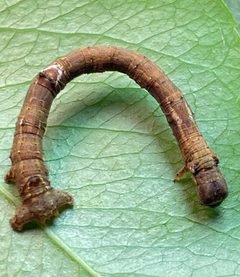
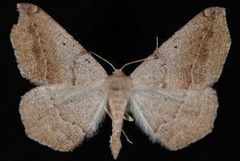
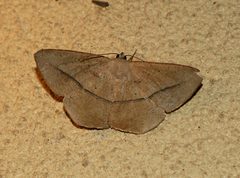
5Prochoerodes is a of geometer moths in the Geometridae, established by Augustus Radcliffe Grote in 1883. The genus comprises approximately 24 described distributed primarily in North America. At least one species, Prochoerodes truxaliata, has been documented feeding on coyote bush (Baccharis pilularis) as a caterpillar. Research has examined Prochoerodes onustaria as a potential agent for Brazilian peppertree, though it was determined unsuitable for this purpose. The genus is regularly encountered in surveys and blacklighting events in western North America.
Pronunciation
How to pronounce Prochoerodes: //proʊˈkɔɪroʊˌdiːz//
These audio files are automatically generated. While they are not always 100% accurate, they are a good starting point.
Images
Distribution
North America; records include Vermont and other United States locations
Host Associations
- Baccharis pilularis (coyote bush) - larval Prochoerodes truxaliata caterpillar ; collected at UC Davis Night event
- Schinus terebinthifolia (Brazilian peppertree) - unsuitable targetProchoerodes onustaria tested but rejected as agent
Behavior
are attracted to ultraviolet light sources; documented at blacklighting survey events
More Details
Parasitoid associations
Prochoerodes forficaria has been documented as a for the ichneumon Pimpla sanguinipes (also known as Coccygomimus sanguinipes), a of caterpillars
Species diversity
The includes at least 24 described : P. accentuata, P. amplicineraria, P. artemon, P. completaria, P. costipunctaria, P. cristata, P. exiliata, P. flexilinea, P. fleximargo, P. forficaria, P. gibbosa, P. lineola, P. marciana, P. martina, P. nonangulata, P. olivata, P. onustaria, P. pilosa, P. striata, P. tetragonata, P. transpectans, P. transtincta, and P. truxaliata
Sources and further reading
- BugGuide
- Wikipedia
- GBIF taxonomy match
- iNaturalist taxon
- NCBI Taxonomy
- Catalogue of Life
- Like a Moth to a Flame: Moth Night at Bohart Museum of Entomology | Bug Squad
- Scarab Beetles First to Arrive at UC Davis 'Moth Night' | Bug Squad
- Bohart Museum of Entomology: One Busy Place! | Bug Squad
- Bug Eric: Wasp Wednesday: Pimpla sanguinipes
- Research article: life history and host range of Prochoerodes onustaria , an unsuitable classical biological control agent of Brazilian peppertree