
Patalene olyzonaria
(Walker, 1860)
Juniper Geometer Moth, juniper-twig geometer
Patalene olyzonaria, commonly known as the juniper-twig geometer or Juniper , is a small geometrid native to eastern North America. It is notable for its association with coniferous plants, particularly junipers. The exhibits an extended period with multiple per year, making it a common late-season moth at blacklight stations.
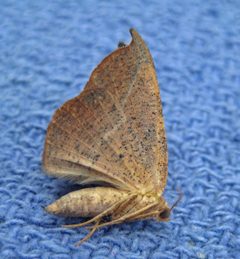
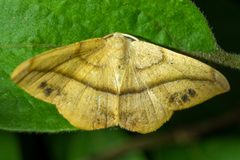
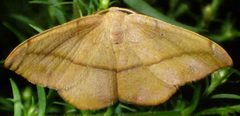
Pronunciation
How to pronounce Patalene olyzonaria: /ˈpætəˌlɛni ˌoʊlɪzoʊˈneɪriə/
These audio files are automatically generated. While they are not always 100% accurate, they are a good starting point.
Identification
The combination of small size (21–25 mm wingspan), late-season activity (April–November, peaking in autumn), and geographic distribution in eastern North America helps distinguish this from similar geometrids. Larval association with Juniperus species provides additional identification context where plants are known. The 'juniper-twig geometer' reflects its larval habit of feeding on juniper twigs.
Images
Appearance
have a wingspan of 21–25 mm. As a member of Geometridae, it has the characteristic slender body and broad, relatively flat wings typical of geometer moths.
Habitat
Associated with supporting Juniperus , including open woodlands, forest edges, and areas with eastern red cedar or other native junipers. are attracted to artificial light sources at night.
Distribution
Eastern North America, ranging from Quebec and New Hampshire south to Florida, west to Texas, and north to Wisconsin. Records indicate presence throughout this range with highest observation in the eastern United States.
Seasonality
are active from April through November, with peak abundance in late summer and autumn. The produces two to three per year, with late-season individuals frequently observed at blacklights in October and November.
Diet
Larvae feed on Juniperus (junipers). They have also been observed feeding on Thuja occidentalis (northern white-cedar) and possibly Pinus species (pines). feeding habits are not documented.
Host Associations
- Juniperus - larval food plantprimary
- Thuja occidentalis - larval food plantoccasional
- Pinus - possible larval food plantunconfirmed
Life Cycle
Two to three per year. stage not explicitly documented in available sources. Larval development occurs on plant foliage.
Behavior
are and attracted to artificial light sources. They are commonly captured at blacklight stations during autumn months when other have declined in abundance.
Ecological Role
Larvae function as herbivores on coniferous plants, potentially contributing to nutrient cycling and serving as food for and . The is part of the late-season that supports .
Human Relevance
Occasionally noted in entomological surveys and blacklighting efforts. Not considered an economic pest despite feeding on juniper . The species serves as an indicator of healthy juniper and contributes to biodiversity documentation efforts.
Similar Taxa
- Other Patalene speciescongeneric may overlap in range and require genitalia examination or larval association for reliable identification
- Other autumn geometridslate-season period overlaps with numerous small geometrid ; size and association help distinguish
More Details
Observation notes
A blog record from Kansas in late October 2023 documents this as part of a diverse autumn blacklight , illustrating its persistence into late season when many other species have concluded their periods.