
Oreta rosea
Walker, 1855
Rose Hooktip, Rose Hooktip Moth
Oreta rosea, commonly known as the Rose Hooktip or Rose Hooktip , is a in the Drepanidae (hooktip moths). Described by Francis Walker in 1855, this moth is distributed across Canada and eastern North America. It inhabits moist temperate hardwood forests and exhibits patterns, with active from May through September. The species is recognized by its distinctive wing shape with hooked apices.
Pronunciation
How to pronounce Oreta rosea: /ɔˈriːtə ˈroʊziə/
These audio files are automatically generated. While they are not always 100% accurate, they are a good starting point.
Identification
The hooked forewing apex distinguishes Oreta rosea from most other . Within Drepanidae, it can be separated from similar hooktip by its pinkish coloration and the combination of size (25–34 mm wingspan) with its eastern North American distribution. The pattern (May–September) helps distinguish it from relatives where ranges overlap. Genitalia examination may be necessary for definitive identification from closely related Oreta species.
Images
Appearance
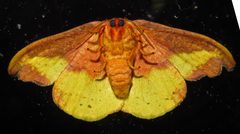
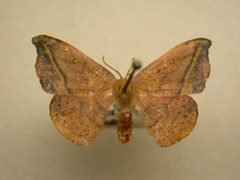
have a wingspan of 25–34 mm. The forewings possess the characteristic hooked or falcate apex typical of the Drepanidae , giving the its . Coloration tends toward pinkish or rosy tones, consistent with the specific epithet. Wing margins are often somewhat scalloped. The body is relatively slender compared to the wing surface area.
Habitat
Moist temperate hardwood forests. Occupies forested areas with sufficient humidity to support larval plants, typically in regions with adequate precipitation and cover.
Distribution
North America. Range extends across Canada from northern Alberta and northern Manitoba eastward to Newfoundland. Southward distribution reaches east of the Great Plains to Florida and eastern Texas. Absent from most of the Great Plains and western mountain regions.
Seasonality
are active from May to September. Two occur per year (). Larvae are present from July through October.
Diet
Larvae feed on various hardwood , specifically including Betula (birch) and Viburnum species. feeding habits are not documented in available sources.
Host Associations
- Betula - larval food plantBirch
- Viburnum - larval food plantVarious Viburnum
Life Cycle
with two annually. of the first generation emerge in May, with second generation adults flying from roughly July through September. Larvae occur from July to October, suggesting overlapping generations and/or extended larval development for the second . stage is not explicitly documented but likely occurs as pupa or late-instar larva given the .
Ecological Role
Larval herbivore on hardwood trees and shrubs. As a folivore on Betula and Viburnum, contributes to nutrient cycling in forest and serves as prey for and . likely function as prey for including bats and birds.
Human Relevance
No documented economic or agricultural significance. Occasionally encountered by naturalists and enthusiasts in eastern North American forests. Not known to be a pest of ornamental or commercial plantings.
Similar Taxa
- Other Oreta speciesShare hooked wing apices and similar size; require genitalia dissection or geographic range for definitive separation
- Other Drepanidae (hooktip moths)Share -level wing shape but differ in coloration, size, or distribution; Drepana and related often have different color patterns
More Details
Nomenclatural history
Originally described as Drepana rosea by Walker in 1855, later transferred to Oreta. Basionym Drepana rosea is listed in NCBI .
Collection records
GBIF distribution records confirm presence in Alberta, Manitoba, Saskatchewan (Canada), and Vermont (USA), consistent with the broader North American range described in literature.
Sources and further reading
- BugGuide
- Wikipedia
- GBIF taxonomy match
- iNaturalist taxon
- NCBI Taxonomy
- Catalogue of Life
- She’s a Peach of a Permanent Resident | Bug Squad
- Oh, the Bugs They Saw at the Bohart! | Bug Squad
- Hissers: Big, Bold and Beautiful | Bug Squad
- Bohart Museum Open House on 'Many Legged Wonders': How Many Legs Does an Isopod Have? | Bug Squad
- UC Davis Picnic Day: Let's Go on an Insect Scavenger Hunt! | Bug Squad
- 'A Water Leak' That Turned Into a Surprise Birthday Party | Bug Squad