
Oreta
Walker, 1855
Species Guides
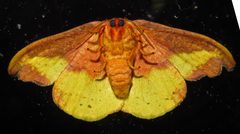
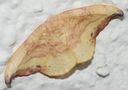
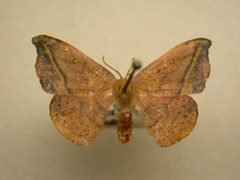
1- Oreta rosea(Rose Hooktip)
Oreta is a of hook-tip moths in the Drepanidae, established by Francis Walker in 1855. The genus contains approximately 50 described distributed across Asia, organized into seven recognized species groups based on morphological characteristics. Species are primarily found in tropical and subtropical regions of East Asia, Southeast Asia, and the Indian subcontinent.
Pronunciation
How to pronounce Oreta: /oˈreː.ta/
These audio files are automatically generated. While they are not always 100% accurate, they are a good starting point.
Identification
Members of Oreta can be distinguished from other Drepaninae by genitalic , particularly the structure of the male valvae and female ostium. -level identification relies on wing pattern details, body coloration, and geographic distribution. The genus is characterized by the presence of a fovea (depression) on the forewing in many species, though this trait varies among species groups.
Images
Habitat
occur in forested including tropical and subtropical broadleaf forests, montane forests, and forest edges. Many species have been recorded at elevations ranging from lowlands to mid-elevation mountains.
Distribution
Distributed across East Asia, Southeast Asia, and parts of the Indian subcontinent. Records include China, Japan, Korea, Taiwan, Vietnam, Thailand, Myanmar, Malaysia, Indonesia, the Philippines, and India. Some are to specific islands or mountain ranges.
Similar Taxa
- DrepanaSimilar hook-tip wing ; distinguished by differences in wing venation and male genitalia structure
- ApexOverlapping distribution and similar size; Oreta typically have more rounded wing apices
- TridrepanaSimilar appearance in some groups; separated by forewing fovea presence and genitalic characters
More Details
Species Groups
The is divided into seven groups: rosea, insignis, extensa, fuscopurpurea, carnea, rubromarginata, and an unknown group for species not yet assigned. These groupings are based primarily on male genitalia and wing pattern characteristics.
Taxonomic History
The has undergone significant revision, particularly by Chu & Wang (1987) who established the modern group system, and Song et al. (2012) who revised Chinese Oretinae. Several species have been moved to other genera or synonymized.