
Areniscythris
Powell, 1976
Species Guides
1- Areniscythris brachypteris(Oso Flaco Flightless Moth)
Areniscythris is a of small in the Scythrididae, established by Powell in 1976. The genus contains two described : A. brachypteris and A. whitesands, both associated with sandy . The genus name references its association with sand (Latin 'arena' = sand).
Pronunciation
How to pronounce Areniscythris: //ˌɛəˌniˈsɪθrɪs//
These audio files are automatically generated. While they are not always 100% accurate, they are a good starting point.
Identification
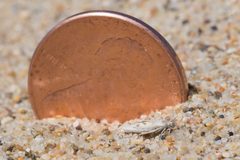
Areniscythris are distinguished from other Scythrididae by reduced wing size and association with sand dune . The type species A. brachypteris has notably short wings ('brachypteris' = short-winged). Specific diagnostic features for the require examination of genitalia .
Images
Habitat
Associated with sandy environments, including gypsum sand dunes and white sand formations. The A. whitesands is named for its occurrence in white sand .
Distribution
Known from North America, specifically the southwestern United States. A. brachypteris occurs in California, while A. whitesands is documented from white sand dunes in New Mexico.
Similar Taxa
- ScythrisLarger in same with more widespread distribution and typically longer wings; Areniscythris distinguished by reduced wings and sand dune specialization
- EuscythrisAnother Scythrididae ; Areniscythris separated by wing reduction and specificity
More Details
Etymology
The name combines Latin 'arena' (sand) with 'Scythris', the type genus of Scythrididae, reflecting the sandy associations of its .
Taxonomic history
The second , A. whitesands, was described nearly 40 years after the was established, indicating these are rarely encountered and poorly collected.