
Areniscythris brachypteris
Powell, 1976
Oso Flaco Flightless Moth, sand-dune grasshopper moth
Areniscythris brachypteris is a flightless in the Scythrididae, described by Jerry A. Powell in 1976. It is to coastal sand dunes of California and is notable among Lepidoptera for its reduced wings and inability to fly. The has been observed in 90 iNaturalist records, suggesting it is documented but not abundant.
Pronunciation
How to pronounce Areniscythris brachypteris: /ˌɑː.rəˈnɪs.kɪ.θrɪs brækˈɪp.tər.ɪs/
These audio files are automatically generated. While they are not always 100% accurate, they are a good starting point.
Identification
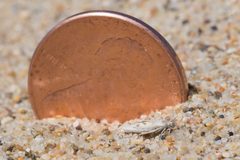
Distinguished from other Scythrididae by its flightless condition and reduced wings (brachypterous condition, referenced in the epithet). The 'sand-dune ' suggests possible jumping locomotion as an alternative to , though this has not been formally documented.
Images
Habitat
Coastal sand dunes of California. Specific microhabitat details beyond dune systems are not documented.
Distribution
to coastal sand dunes of California, USA. Precise range boundaries within California are not established in available sources.
Behavior
Flightless due to reduced wings. The ' ' implies saltatorial (jumping) locomotion may substitute for , but this has not been formally described.
Human Relevance
None documented. The is of potential conservation interest due to its restricted (coastal sand dunes) and flightless condition, which may limit ability.
Similar Taxa
- Other Scythrididae speciesMost scythridid are fully winged and capable of ; A. brachypteris is distinguished by its brachypterous condition.
More Details
Nomenclature
The specific epithet 'brachypteris' directly references the reduced-wing (brachypterous) condition that renders this flightless.