
Mirificarma
Gozmány, 1955
Species Guides
1Mirificarma is a of small in the Gelechiidae, established by Gozmány in 1955. The genus contains approximately 25 described , organized into three species-groups based on morphological similarities: the montivaga, maculatella, and interruptella groups. Species are distributed across Europe, with records from Scandinavia (Denmark, Norway, Sweden) and broader European ranges. Many species were originally described under other genera and later transferred to Mirificarma.
Pronunciation
How to pronounce Mirificarma: //mɪˌrɪfɪˈkɑːrmə//
These audio files are automatically generated. While they are not always 100% accurate, they are a good starting point.
Identification
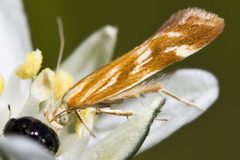
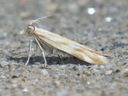
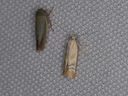
-level identification within Mirificarma requires examination of genitalia and wing pattern details. The is characterized by features typical of Gelechiidae, including narrow, often pointed forewings. Species groups are distinguished by forewing pattern elements: the maculatella group typically shows spotted or streaked patterns, the interruptella group often has interrupted fasciae or bands, and the montivaga group has distinctive markings associated with montane . Accurate identification generally requires reference to original species descriptions and revisionary works by Pitkin (1984) and Huemer & Karsholt (1999, 2001).
Images
Distribution
Europe. Documented occurrence records from Denmark, Norway, and Sweden (GBIF). Individual have broader or more restricted ranges within Europe; for example, Mirificarma cytisella and M. ulicinella are widespread, while others such as M. montivaga and M. pederskoui have more limited distributions.
Similar Taxa
- Other Gelechiidae generaMirificarma resemble numerous other small gelechiid moths in general appearance. Separation from closely related such as Gelechia and Chionodes requires detailed examination of genital and specific wing pattern elements, particularly the arrangement of spots and fasciae on the forewing.
More Details
Species Groups
Pitkin (1984) organized Mirificarma into three informal -groups based on morphological patterns: (1) montivaga group (2 species), (2) maculatella group (9 species), and (3) interruptella group (14 species). This grouping reflects shared derived characters in genitalia and wing patterns, though it has not been formally tested with molecular data.
Taxonomic History
The was erected by Gozmány in 1955 to accommodate previously placed in other genera, particularly Gelechia and Teleia. Several species were described in the 19th and early 20th centuries under different generic combinations, with subsequent transfers to Mirificarma based on revisionary studies. Mirificarma obscurella (Hübner, [1817]) has uncertain status due to preoccupation of the specific epithet.