
Gonioterma mistrella
(Busck, 1907)
Gonioterma mistrella is a small in the Depressariidae, described by Busck in 1907. It is distributed across central and eastern North America, from Manitoba and Pennsylvania south to Texas and Mexico. are active primarily during the warmer months, with larvae feeding specifically on timothy grass (Phleum pratense).
Pronunciation
How to pronounce Gonioterma mistrella: /ɡoʊniəˈtɜrmə mɪˈstrɛlə/
These audio files are automatically generated. While they are not always 100% accurate, they are a good starting point.
Identification
The combination of small size (20–23 mm wingspan), North American distribution in grassland regions, and association with timothy grass (Phleum pratense) as a larval may aid identification. Larvae are distinguished by their pink coloration with a dark stripe and chestnut . Similar Depressariidae in the region require dissection or genital examination for definitive separation.
Images
Appearance
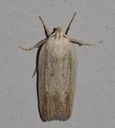
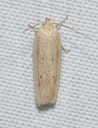
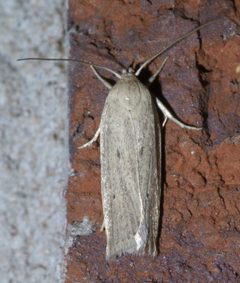
have a wingspan of 20–23 mm. Larvae are pink with a dark stripe and a chestnut-colored .
Habitat
Grassland and agricultural where the larval plant Phleum pratense (timothy grass) grows. Found in open areas, meadows, and fields across its range.
Distribution
North America: recorded from Mississippi, Missouri, Ohio, Illinois, Texas, Kansas, Pennsylvania, New Mexico, Manitoba (Canada), and Mexico.
Seasonality
are on wing from May to October, with peak activity during summer months.
Diet
Larvae feed on Phleum pratense (timothy grass). feeding habits not documented.
Host Associations
- Phleum pratense - larval food planttimothy grass
Life Cycle
Larval stage feeds on Phleum pratense. and details not documented. spans May through October, suggesting multiple or extended emergence period.
Ecological Role
Larval herbivore on timothy grass, potentially contributing to nutrient cycling in grassland . Specific ecological impacts not studied.
Human Relevance
Larvae feed on timothy grass, a forage crop and lawn grass, but economic significance as a pest has not been documented. No known medical or cultural importance.
Similar Taxa
- Other Gonioterma species Gonioterma contains multiple North American requiring genital dissection or molecular analysis for reliable identification.
- Stenomatinae moths in Depressariidae Stenomatinae includes numerous small, drab with similar ; plant association and geographic range help narrow identification.
More Details
Original description
Originally described as Stenoma mistrella by Busck in 1907, later transferred to Gonioterma.
Observation frequency
iNaturalist records 678 observations, indicating it is moderately well-documented by citizen scientists.