
Gonioterma
Walsingham, 1897
Species Guides
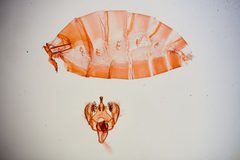
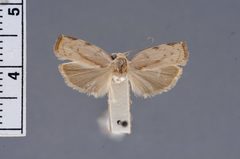
2Gonioterma is a of small in the Stenomatinae, Depressariidae. The genus is restricted to tropical America. Larvae of at least one , G. exquisita, are narrow, oligophagous caterpillars that feed exclusively on pubescent leaves of Byrsonima (Malpighiaceae) and construct distinctive -and-silk shelters.

Pronunciation
How to pronounce Gonioterma: //ˌɡoʊniˈoʊtɜrmə//
These audio files are automatically generated. While they are not always 100% accurate, they are a good starting point.
Images
Habitat
Brazilian Cerrado (cerrado sensu stricto), specifically documented at 1,100 m elevation in the Distrito Federal. The occurs across tropical America.
Distribution
Restricted to tropical America; documented in the Brazilian Cerrado.
Seasonality
Caterpillar abundance peaks during the wet season (October–April), correlating with mature leaf availability on plants.
Diet
Larvae of G. exquisita feed exclusively on mature, pubescent leaves of Byrsonima pachyphylla (Malpighiaceae).
Host Associations
- Byrsonima pachyphylla Griseb. - larval Malpighiaceae; primary for G. exquisita
- Byrsonima crassa Niedenzu - larval synonymous with B. pachyphylla
- Byrsonima species - larval pubescent-leaved
Life Cycle
Caterpillars construct planorbid-shaped shelters using and silk on leaves. Three size classes observed based on shelter cover diameter: small (≤1 cm), medium (1.1–2 cm), and large (up to 2 cm). Some individuals have been reared under laboratory conditions.
Behavior
Larval abundance tracks plant , with peaks synchronized to wet-season leaf production. Caterpillars are shelter-builders, remaining concealed within -and-silk structures.
Ecological Role
herbivore on Byrsonima pachyphylla; represents the high diet specificity characteristic of Cerrado lepidopteran fauna.
More Details
Taxonomic note
Some sources list Gonioterma in Elachistidae; current classification places it in Depressariidae based on Catalogue of Life, GBIF, and NCBI.
Research context
Most detailed biological information derives from studies of G. exquisita at a single Cerrado site; broader -level patterns remain undocumented.