
Antaeotricha thomasi
(Barnes & Busck, 1920)
Antaeotricha thomasi is a small in the Depressariidae, described by William Barnes and August Busck in 1920. It is native to the southwestern United States, with confirmed records from Arizona, New Mexico, and Colorado. The is characterized by its plain, unmarked pale wings, which distinguish it from many that typically display various spotting or patterning.
Pronunciation
How to pronounce Antaeotricha thomasi: /ænˌtiːoʊˈtraɪkə ˈθoʊməsˌaɪ/
These audio files are automatically generated. While they are not always 100% accurate, they are a good starting point.
Identification
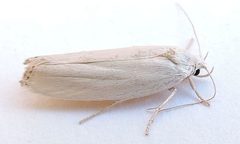
Distinguished from similar Antaeotricha by its , unmarked forewings. Most in the , including the similar A. albulella, display some form of spotting or contrasting pattern on the forewings. The combination of plain creamy white forewings and pale yellowish white hindwings is diagnostic for this species within its known range.
Images
Appearance
A small with wingspan of 21–24 mm. Forewings are yellowish creamy white and completely without markings. Hindwings are pale yellowish white. The overall appearance is notably plain and unpatterned compared to related .
Distribution
Recorded from three states in the southwestern United States: Arizona, New Mexico, and Colorado. Specific associations and elevational range have not been documented.
Similar Taxa
- Antaeotricha albulellaSimilar size and pale coloration, but A. albulella has one or two black spots on the forewings and white or pale gray hindwings, whereas A. thomasi has completely unmarked forewings.
More Details
Taxonomic history
Described by William Barnes and August Busck in 1920 based on specimens from the southwestern United States. The epithet honors an individual with the surname Thomas, though the specific honoree is not documented in the original description.