
Ethmia semiombra
Dyar, 1902
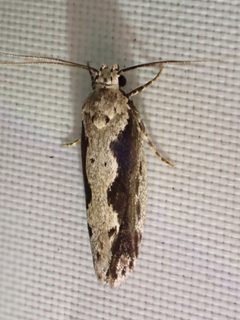
Ethmia semiombra is a small in the Ethmiidae (Depressariidae in some classifications) found in Texas and Mexico. exhibit a distinctive wing pattern with dark coloration on the costal half of the forewings contrasting with whitish, gray-tinged half. The shows pronounced seasonality with adults active in February, May, June, September (Texas), and July (Tamaulipas), suggesting multiple per year. Two are recognized: E. s. semiombra in eastern Mexico and southern Texas, and E. s. nebulombra in the Yucatán.
Pronunciation
How to pronounce Ethmia semiombra: /ˈɛθ.mi.ə sɛˈmaɪ.om.brə/
These audio files are automatically generated. While they are not always 100% accurate, they are a good starting point.
Identification
Distinguished from other Ethmia by the specific pattern of dark costal and pale forewing halves. The sharp demarcation between wing color zones and the pale brownish half of the hindwings are key characters. Species in Ethmia are generally similar in black, white, and gray coloration but differ in precise wing pattern details; dissection of genitalia is often required for definitive identification.
Images
Appearance
Small with forewing length 9.2–11.7 mm. Forewings dark on costal half, whitish and lightly to heavily gray-tinged on half. Hindwings whitish basally, becoming pale brownish on half.
Distribution
Southern Texas (USA) and Mexico, including eastern Mexico, Tamaulipas, and Yucatán. E. s. semiombra occurs in eastern Mexico and southern Texas; E. s. nebulombra occurs in the Yucatán.
Seasonality
active February, May, June, and September in Texas; July in Tamaulipas. Multiple per year probable.
Diet
Larvae probably feed on Ehretia elliptica (Boraginaceae or Ehretiaceae).
Host Associations
- Ehretia elliptica - probable larval plant placement varies between Boraginaceae and Ehretiaceae
Similar Taxa
- Other Ethmia speciesSimilar black, white, and gray coloration; require examination of wing pattern details or genitalia for separation
- Tortricid leafrolling mothsSuperficial resemblance in size and posture; distinguished by upturned labial palps in Ethmia (resembling horns between )
Sources and further reading
- BugGuide
- Wikipedia
- GBIF taxonomy match
- iNaturalist taxon
- Catalogue of Life
- What's in a Name? Leslie Saul-Gershenz and Norm Gershenz | Bug Squad
- Bug Eric: My Personal National Moth Week, 2017
- Bug Eric: September 2017
- Bug Eric: New Mexico Night Bugs
- Nota Lepidopterologica goes advanced open access with Pensoft Publishers | Blog
- Uncategorized | Blog - Part 22