
Agonopterix robiniella
(Packard, 1870)
Four-dotted Agonopterix Moth, Locust Leaf Roller
Agonopterix robiniella is a small in the Depressariidae, commonly known as the four-dotted agonopterix moth or locust leaf roller. It is native to eastern North America and is tightly associated with black locust trees. The is named for the characteristic pattern of four dark spots on its forewings. Larvae are leaf rollers that feed exclusively on Robinia pseudoacacia.
Pronunciation
How to pronounce Agonopterix robiniella: /ˌæɡəˈnɒptərɪks roʊˌbɪniˈɛlə/
These audio files are automatically generated. While they are not always 100% accurate, they are a good starting point.
Identification
Distinguished from similar Agonopterix by the combination of yellow forewings with brick red mottling, two black discal spots at the basal third (giving the 'four-dotted' appearance when both wings are visible), and the dark band before the termen. The specific association with black locust (Robinia pseudoacacia) and plant provides additional diagnostic context. Hindwing coloration (greyish fuscous with dark terminal edge) differs from some congeneric species with paler hindwings.
Images
Habitat
Deciduous forests and wooded areas where black locust (Robinia pseudoacacia) occurs. Includes both natural woodlands and disturbed or planted areas with locust trees. Found at various elevations within the plant's range.
Distribution
Eastern North America: Nova Scotia to Georgia, west to Oklahoma, north to Illinois, Michigan, and southern Ontario. Core range centers on the native distribution of its plant, Robinia pseudoacacia.
Seasonality
active from June to October. Single or possibly partial second inferred from extended period; precise voltinism not documented.
Diet
Larvae feed exclusively on leaves of Robinia pseudoacacia (black locust). do not feed; mouthparts reduced or non-functional.
Host Associations
- Robinia pseudoacacia - larval food plantsole known
Life Cycle
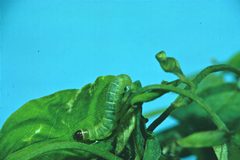
stage not described in detail. Larvae are leaf rollers, feeding within rolled or folded leaves of black locust. likely occurs in leaf litter or soil, though specific site not documented. emerge in summer and persist into autumn.
Behavior
Larvae construct leaf rolls by folding or rolling black locust leaves, feeding within this shelter. are and attracted to light. No migratory documented.
Ecological Role
herbivore on black locust. Acts as a /roller, causing minor to moderate defoliation of trees. Serves as prey for including birds and . No significant role as .
Human Relevance
Minor pest of black locust in plantations or ornamental settings, though damage is generally limited and not economically significant. The 'locust leaf roller' reflects its association with this forestry . Occasionally encountered by lepidopterists and naturalists.
Similar Taxa
- Agonopterix alstroemerianaSimilar size and general appearance, but has different forewing pattern without the two distinct basal discal spots; feeds on poison hemlock rather than legumes
- Agonopterix arenellaOverlapping range and similar , but forewing pattern differs with more uniform fuscous shading and less distinct yellow ground color; plants include umbellifers
- Depressaria speciesFormerly classified in same ; distinguished by wing venation and genitalia characters, though field identification requires dissection or plant association
More Details
Taxonomic history
Originally described as Depressaria robiniella by Packard in 1870 (some sources cite 1869 for the basionym), later transferred to Agonopterix based on revised classification of Depressariidae.
Conservation status
Not evaluated by IUCN; appears secure throughout range given widespread plant and extensive suitable .