
Agonopterix flavicomella
(Engel, 1907)
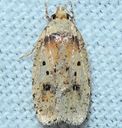
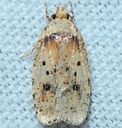
Agonopterix flavicomella is a small in the Depressariidae, first described by Engel in 1907. The is distributed across the eastern and midwestern United States. have a wingspan of approximately 16 mm and are active during spring, summer, and early autumn. Larvae are known to feed on two specific plants: Heracleum lanatum (cow parsnip) and integerrima (yellow pimpernel).
Pronunciation
How to pronounce Agonopterix flavicomella: //ˌæɡəˈnɒptərɪks ˌflævɪkoʊˈmɛlə//
These audio files are automatically generated. While they are not always 100% accurate, they are a good starting point.
Identification
The small size (16 mm wingspan) and specific geographic distribution in the eastern and midwestern United States may aid identification. are active from April through August and again in October, a pattern that may help distinguish this from related with different seasonal activity. Confirmation likely requires examination of genitalia or molecular analysis.
Images
Habitat
Specific preferences are not documented. Based on known larval plants, the likely occurs in areas where Heracleum lanatum (cow parsnip) and integerrima (yellow pimpernel) grow, including open woodlands, meadows, and streamside vegetation.
Distribution
Eastern and midwestern United States. Recorded from Alabama, Georgia, Illinois, Indiana, Kentucky, Maine, Michigan, Minnesota, North Carolina, Ohio, Tennessee, Virginia, and West Virginia.
Seasonality
are on wing from April to August, with an additional period of activity in October. This bimodal or extended pattern suggests at least one per year, with possible partial second generation or extended .
Diet
Larvae feed on Heracleum lanatum (cow parsnip) and integerrima (yellow pimpernel). feeding habits are not documented.
Host Associations
- Heracleum lanatum - larval food plantcow parsnip
- Taenidia integerrima - larval food plantyellow pimpernel
Life Cycle
Complete with , larva, pupa, and stages. Specific details of duration, stage, and number of per year are not documented. The extended adult period from April through October suggests larvae may be present during much of the growing season.
Behavior
No specific behavioral observations documented beyond activity patterns.
Ecological Role
Larvae function as herbivores on specific plants in the Apiaceae . Their role in broader processes is not documented.
Human Relevance
No documented economic or medical significance. Not known to be a pest . The plant Heracleum lanatum is not the highly toxic giant hogweed (Heracleum mantegazzianum), though both are in the same .
Similar Taxa
- Other Agonopterix speciesMany in the Agonopterix are small, similar in appearance, and require detailed examination for accurate identification. Geographic distribution and plant associations may help distinguish A. flavicomella from .
More Details
Nomenclature
Originally described as Depressaria flavicomella by Engel in 1907, later transferred to the Agonopterix.
Observation frequency
The has relatively few documented observations (28 records on iNaturalist as of source date), suggesting it may be underreported, locally distributed, or genuinely uncommon.