
Ceranemota tearlei
(Edwards, 1888)
Ceranemota tearlei is a in the Drepanidae, first described by Henry Edwards in 1888. It occurs in western North America from British Columbia and Alberta south to California, Utah, and Colorado. are active from late August to October, with one per year. The larvae feed on specific woody plants including serviceberry, mountain-ash, and willow .
Pronunciation
How to pronounce Ceranemota tearlei: /sɛrəˈniːmoʊtə ˈtɪərliː/
These audio files are automatically generated. While they are not always 100% accurate, they are a good starting point.
Identification
Distinguished from related Ceranemota by geographic range and association with specific plants. fly late in the season (August-October), which may help separate from earlier-flying . Genitalia examination may be required for definitive identification.
Images
Appearance
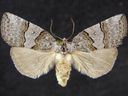
have forewings with a pattern typical of the . Hindwings are lighter grey with somewhat darker markings.
Habitat
Higher elevation spruce-fir and mixed hardwood-conifer forests; lower elevation ponderosa pine forests; quaking aspen forests; moist riparian areas along creeks.
Distribution
Western North America: British Columbia and central Alberta south to central California in the west, and to Utah and Colorado in the Rocky Mountains.
Seasonality
on wing from late August to October. One per year.
Diet
Larvae feed on Amelanchier alnifolia (Saskatoon serviceberry), Sorbus scopulina (mountain-ash), and Salix (willows). diet unknown.
Host Associations
- Amelanchier alnifolia - larval food plantSaskatoon serviceberry
- Sorbus scopulina - larval food plantMountain-ash
- Salix - larval food plantWillow
Life Cycle
(one per year). Larval stage feeds on plants; and timing not documented.
Ecological Role
Larval herbivore on woody shrubs and trees in montane and riparian forest . Specific ecological functions (pollination, , decomposition) not documented.
Human Relevance
No documented economic or cultural significance. Occasionally encountered by naturalists and enthusiasts in western North America.
Similar Taxa
- Ceranemota fasciataOverlapping range in western North America; may require genitalia examination for separation
- Ceranemota albertaeSimilar appearance and ; distinguished by range and period details
More Details
Taxonomic Note
Placed in Drepanidae (hook-tip moths) by most modern sources; Catalogue of Life lists under , reflecting historical classification variations.