
Synanthedon rubrofascia
(Edwards, 1881)
Tupelo Clearwing Moth
Synanthedon rubrofascia, the Tupelo Clearwing Moth, is a North American clearwing moth in the Sesiidae. exhibit , with males possessing highly bipectinate (feathery) . The is and, like most sesiids, generally unattracted to light traps. It is associated with Nyssa (tupelo) plants, though specific details remain poorly documented.
Identification
Distinguished from similar clearwing moths by the combination of reddish abdominal banding, white thoracic tufts in males, and association with Nyssa plants. The highly feathered male separate it from females and from in other sesiid . Wing venation and specific pattern elements may require dissection or reference to specialized keys for definitive identification.
Images
Appearance
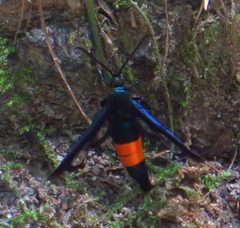
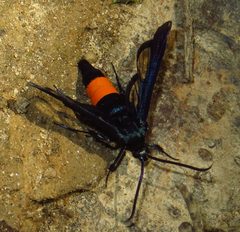
have narrow, elongate wings with reduced scaling that creates a transparent, glass-like appearance. Males have conspicuously bipectinate and wispy white thoracic tufts formed by hair-like . The body is -mimicking in form. Flattened marginal scales on the wings create distinctive wing edges. Coloration includes reddish-brown fasciae (bands) on the , consistent with the epithet.
Habitat
Associated with wetlands and bottomland forests where plants in the Nyssa (tupelo, black gum) occur. Specific microhabitat preferences for larvae are poorly documented but likely involve the roots or lower stems of host trees.
Distribution
Nearctic region. Documented from south-central Kansas and northwestern Nebraska, with broader distribution inferred from plant range but specific locality records sparse.
Seasonality
active in early to mid-autumn; observed in Kansas in early October and in Nebraska in early October.
Diet
Larvae feed internally on Nyssa (tupelo) , though specific feeding site (roots, trunk, or crown) not clearly documented. feeding habits unknown.
Host Associations
- Nyssa - larval plant ; specific association not confirmed in available sources
Life Cycle
Complete with internal feeding larval stage. Specific details of placement, larval instars, site, and stage not documented in available sources.
Behavior
activity pattern. generally unattracted to light traps, consistent with -wide tendency in Sesiidae. Males have been observed perching on elevated substrates such as dried flower . Adults are mimics in , likely gaining protection from through general hymenopteran resemblance rather than precise mimicry.
Ecological Role
Larvae act as internal herbivores on Nyssa, potentially affecting tree vigor. may contribute to pollination though this is unverified. -mimicry provides apparent anti- defense.
Human Relevance
Minor economic significance; not a major pest of cultivated plants. Of interest to lepidopterists and naturalists due to its habits and -mimicry. lures have been used to attract males for monitoring or collection.
Similar Taxa
- Synanthedon fatiferaAlso a clearwing moth in the same , but associated with Viburnum rather than Nyssa; differs in coloration (purple-blue-black with white spots vs. reddish fasciae)
- Euhagena nebraskaeAnother sesiid with similar habits and -mimicry, but in a different ; males have different antennal structure and thoracic tuft characteristics
- Melittia speciesMore spectacular clearwing moths with different color patterns and associations (typically Cucurbitaceae)
Misconceptions
The is sometimes assumed to be like most ; it is strictly . Its -like appearance may lead to misidentification as a hymenopteran by casual observers.
More Details
Collection challenges
Like most Sesiidae, this is poorly represented in standard collections due to its habits and lack of attraction to light traps. lures are the most effective method for detecting males.
Taxonomic history
Originally described as Aegeria rubrofascia by H. Edwards in 1881; later transferred to Synanthedon. The Aegeria is now restricted to Old World .