
Sphinx dollii
Neumoegen, 1881
Doll's Sphinx, Doll's Sphinx Moth
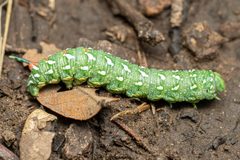
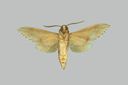
Sphinx dollii is a medium-sized sphinx moth (Sphingidae) native to arid regions of the southwestern United States. have a wingspan of 45–63 mm and are active from June to August. The is , with larvae feeding exclusively on Juniperus species.

Pronunciation
How to pronounce Sphinx dollii: /sfiŋks ˈdɔli.aɪ/
These audio files are automatically generated. While they are not always 100% accurate, they are a good starting point.
Identification
Can be distinguished from other Sphinx by its distribution in arid southwestern and period (June–August). attracted to mercury-vapor and ultraviolet lights in oak-juniper woodland.
Images
Appearance
Medium-sized sphinx moth with wingspan 45–63 mm.
Habitat
Arid brushlands and desert foothills; oak-juniper woodland.
Distribution
Nevada, southern California, Utah, Arizona, Colorado, New Mexico, Oklahoma, and Texas.
Seasonality
on wing June to August; one per year.
Diet
Larvae feed on Juniperus , including Juniperus deppeana. diet not documented.
Host Associations
- Juniperus deppeana - larval plant
- Juniperus - larval plant-level association
Life Cycle
One per year (). Larval stage feeds on juniper; and details not documented.
Behavior
attracted to artificial lights (mercury-vapor and ultraviolet). activity pattern typical of sphingids.
Ecological Role
Larval herbivore on junipers; likely serves as and prey for .
Human Relevance
Occasionally encountered by entomologists at light stations; no significant economic or agricultural impact documented.
Similar Taxa
- Sphinx chersisSimilar size and appearance, but occurs in different range and ; S. chersis larvae feed on ash and olive, not juniper
- Sphinx vashtiAnother juniper-feeding sphinx moth, but with different distribution and period