
Manduca muscosa
Rothschild & Jordan, 1903
Muscosa Sphinx
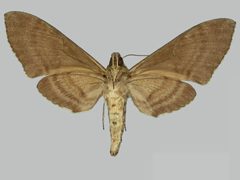
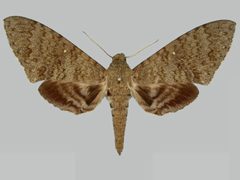
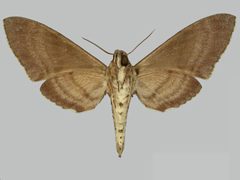
Manduca muscosa, the muscosa sphinx, is a large sphinx moth in the Sphingidae. have a wingspan of 100–126 mm and exhibit darker, olive-toned coloration compared to related . The species occurs from southern Arizona through Central America, with larvae feeding on multiple plants including Verbesina gigantea and members of the Asteraceae family.
Pronunciation
How to pronounce Manduca muscosa: //ˈmæn.dʒuː.kə mʌsˈkoʊ.sə//
These audio files are automatically generated. While they are not always 100% accurate, they are a good starting point.
Identification
Distinguished from Manduca sesquiplex by shorter, less elongate forewing shape. Darker, olive-toned body and wing coloration separates it from paler relatives. Hindwing pale bands are less prominent than in similar Manduca . Overall size and robust build typical of the .
Images
Habitat
Tropical and subtropical lowlands, premontane forests, and oak woodland. Associated with vegetation supporting larval plants.
Distribution
Southern and western Arizona (USA), south through Mexico, Belize, Guatemala, Nicaragua, and Rica.
Seasonality
One per year in southern Arizona with active mid-July to early August. In Rica, adults occur from May to November.
Diet
Larvae feed on Verbesina gigantea, Lasianthaea fruticosa, Eupatorium albicaule, Viguiera dentata, camara, sunflower (Helianthus), and Jacaranda caroba.
Host Associations
- Verbesina gigantea - larval
- Lasianthaea fruticosa - larval
- Eupatorium albicaule - larval
- Viguiera dentata - larval
- Lantana camara - larval
- Helianthus - larval sunflower
- Jacaranda caroba - larval
Life Cycle
One per year in northern parts of range. occurs in soil or leaf litter. Developmental timing varies with latitude: approximately two months in summer conditions. Winter passed in pupal stage.
Behavior
are . Strong fliers typical of Sphingidae. Larvae feed on leaves and stems of plants, often remaining on upper portions of vegetation.
Ecological Role
Larvae function as herbivores on multiple plant . may contribute to pollination of night-blooming flowers, though specific interactions are not documented. Serves as for , as observed in related Manduca species.
Human Relevance
Minor agricultural pest potential given larval feeding on sunflower. Not a significant pest of cultivated solanaceous crops unlike Manduca sexta.
Similar Taxa
- Manduca sesquiplexSimilar size and general appearance, but distinguished by more elongate forewing, paler coloration, and more prominent hindwing banding.
- Manduca sextaRelated with similar larval , but differs in plant preferences and geographic distribution.
More Details
Taxonomic history
Originally described as Protoparce muscosa by Rothschild & Jordan in 1903, later transferred to Manduca.
Sources and further reading
- BugGuide
- Wikipedia
- GBIF taxonomy match
- iNaturalist taxon
- NCBI Taxonomy
- Catalogue of Life
- The Hornworms Are Not Your Friends | Bug Squad
- California Dogface Butterfly Steals the Show | Bug Squad
- Insect FAQs | Entomology Research Museum
- Tough to be a hornworm: Tomato and tobacco hornworms, Manduca quinquemaculata and M. sexta — Bug of the Week
- Advanced Morphology Techniques Reveal Tobacco Hornworm's Secrets
- Scientists Sequence the Genome of the Tobacco Hornworm