
Eumorpha typhon
Klug, 1836
Typhon Sphinx, Typhon Sphinx Moth
Eumorpha typhon, commonly known as the Typhon Sphinx, is a in the Sphingidae. It ranges from Honduras through Mexico to southern Arizona. are active from June to August in the northern part of the range and feed on nectar. Larvae develop on grape and pupate in shallow soil.

Pronunciation
How to pronounce Eumorpha typhon: //juːˈmɔːrfə ˈtɪfɒn//
These audio files are automatically generated. While they are not always 100% accurate, they are a good starting point.
Identification
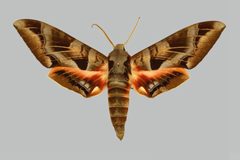
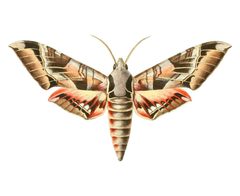
Distinguished from similar Eumorpha by the combination of deep red-brown upperside with pale brown bands, plus the distinctive hindwing pattern: pink costal patch and triangular white spot on the inner margin. The banded pattern differs from the more uniform or spotted patterns of related species.
Images
Appearance
Medium-sized sphinx moth with wingspan 57–64 mm. Upperside of wings deep red-brown with pale brown bands. Hindwings distinctive: each has a pink patch along the costal margin and a triangular white spot on the outer part of the inner margin.
Distribution
Honduras north through Mexico to southern Arizona, USA
Seasonality
on wing June to August in northern part of range
Diet
feed on nectar of various flowers; larvae feed on various grape (Vitis spp.)
Host Associations
- Vitis - larval food plantvarious grape
Life Cycle
Complete . Larvae feed on grape leaves. occurs in shallow soil.
Similar Taxa
- Eumorpha achemonSimilar size and general appearance, but E. achemon has more contrasting pattern with larger pale patches and lacks the distinctive pink hindwing patch of E. typhon
- Eumorpha pandorusRelated sphinx moth with more greenish coloration and different banding pattern; hindwing lacks pink costal patch
More Details
Conservation status
Not evaluated; appears to be relatively common within its range based on iNaturalist observations (952 records)
Etymology
Specific epithet 'typhon' refers to Typhon, a monstrous giant in Greek mythology, father of many monsters; the name may allude to the 's somewhat formidable appearance