
Darapsa
Walker, 1856
Virginia creeper sphinx moths
Species Guides
3- Darapsa choerilus(Azalea Sphinx)
- Darapsa myron(Virginia creeper sphinx)
- Darapsa versicolor(Hydrangea Sphinx)
Darapsa is a of sphinx moths (Sphingidae) first described by Francis Walker in 1856. The genus contains three North American : D. choerilus, D. myron, and D. versicolor. are known for their long used to sip nectar from tubular flowers, while larvae feed on members of the grape (Vitaceae).
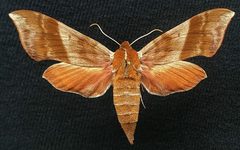
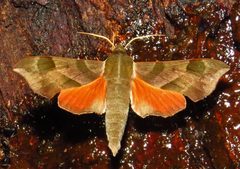
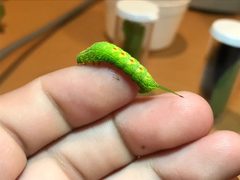
Pronunciation
How to pronounce Darapsa: /dæˈræpsə/
These audio files are automatically generated. While they are not always 100% accurate, they are a good starting point.
Images
Distribution
North America; recorded from Vermont and other parts of the United States. Specific within the have broader ranges: Darapsa myron occurs from Florida to Nova Scotia.
Seasonality
Multiple per year in southern portions of the range; fewer broods (one to two) in northern areas. In Florida, several broods develop annually; in Maryland, two broods are typical.
Diet
Larvae consume leaves of grape plants (Vitaceae), including grape, Virginia creeper (Parthenocissus quinquefolia), and porcelain berry. sip nectar from tubular flowers including honeysuckle, trumpet vine, and mandevilla.
Host Associations
- Vitaceae - larval food plantgrape, Virginia creeper, porcelain berry
- Lonicera - nectar sourcehoneysuckle
- Campsis - nectar sourcetrumpet vine
- Mandevilla - nectar source
Life Cycle
Complete with , larval, pupal, and stages. Females lay eggs on plant leaves. Larvae (hornworms) feed and develop before pupating. Number of per year varies geographically.
Behavior
use an exceptionally long, straw-like to feed on nectar. activity patterns not well documented for the as a whole.
Ecological Role
act as for tubular flowers. Larvae function as herbivores on Vitaceae.
Similar Taxa
- EumorphaBoth contain sphinx moths with larvae feeding on grape plants; Eumorpha includes the Pandorus sphinx (E. pandorus), which overlaps in range and use with Darapsa .
- HemarisBoth are Sphingidae with nectar-feeding , but Hemaris (hummingbird clearwings) are with transparent wings and different larval (honeysuckles, snowberries, viburnums, hawthorns, cherries).
More Details
Darwin's prediction
The long of sphinx moths relates to a famous prediction by Charles Darwin, who inferred that an orchid with a nectar receptacle nearly a foot deep must be pollinated by a with an exceptionally long tongue. This was later confirmed with the discovery of Xanthopan morganii praedicta.