
Darapsa choerilus
Cramer, 1779
Azalea Sphinx
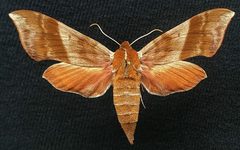
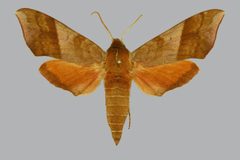
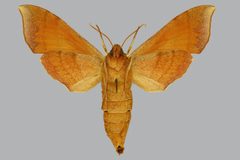
Darapsa choerilus, commonly known as the azalea sphinx, is a sphinx moth in the Sphingidae. It occurs in eastern North America from the United States through southern Canada. The was first described by Pieter Cramer in 1779. are medium-sized with a wingspan of 57–75 mm. Larvae feed on azalea (Rhododendron) and Viburnum species.
Pronunciation
How to pronounce Darapsa choerilus: //dəˈræpsə ˈkɔɪrɪləs//
These audio files are automatically generated. While they are not always 100% accurate, they are a good starting point.
Identification
Medium-sized sphinx moth with wingspan 57–75 mm. Distinguished from similar Darapsa by geographic range and, in , by specific wing pattern details. Larvae can be identified by plant association with azalea and Viburnum species, combined with the presence of the terminal horn characteristic of sphingid caterpillars.
Images
Appearance
have a wingspan of 57–75 mm. As a member of Sphingidae, adults possess a long, coiled for feeding on nectar. Larvae are hornworms—caterpillars with a characteristic pointed horn on the end.
Habitat
Associated with supporting its larval plants: azalea and Viburnum . These include deciduous and mixed woodlands, shrublands, and suburban and rural landscapes where these plants are cultivated or occur naturally.
Distribution
United States and southern Canada east of the Rocky Mountains. Present in Vermont and across eastern North America.
Diet
Larvae feed on leaves of azalea (Rhododendron) and Viburnum . feed on nectar, presumably from tubular flowers as is typical for sphingid , though specific floral records for this species are not documented in the provided sources.
Host Associations
- azalea (Rhododendron species) - larval plantprimary larval food source
- Viburnum species - larval plantprimary larval food source
Life Cycle
Complete with , larva, pupa, and stages. Larvae are hornworms with a terminal horn. Number of per year varies by latitude; specific information for this is not documented in available sources.
Behavior
are or . Like other sphinx moths, adults are capable of rapid, sustained . Larvae feed on leaves of plants.
Ecological Role
Larvae act as herbivores on their plants. may serve as when feeding on nectar, though specific pollination relationships are not documented.
Human Relevance
Occasional pest of cultivated azaleas and Viburnums. Otherwise of interest to lepidopterists and naturalists. Not known to be of significant economic importance beyond minor ornamental damage.
Similar Taxa
- Darapsa myron (Virginia creeper sphinx)Similar size and appearance; distinguished by larval plants (grape , Vitaceae, rather than azalea/Viburnum) and subtle differences in wing pattern
- Darapsa versicolor (Hydrangea sphinx)Similar and general appearance; distinguished by larval association with Hydrangea and related plants in Hydrangeaceae
- Eumorpha pandorus (Pandorus sphinx)Similar and ; larger size, more complex wing pattern with distinct eyespots, and different larval (grape family)