
Perigonia
Herrich-Schäffer, 1854
Species Guides
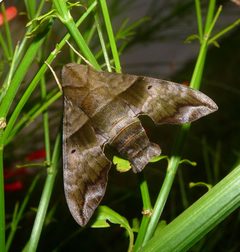
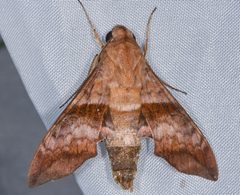
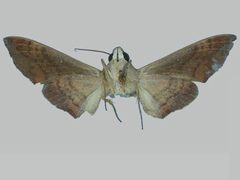
1- Perigonia lusca(half-blind sphinx)
Perigonia is a of hawkmoths in the Sphingidae, first described by Herrich-Schäffer in 1854. The genus contains approximately 15 described distributed primarily in the Neotropical region. Species within this genus are characterized by their relatively small size compared to other sphingids and distinctive wing patterns. The genus is placed in the tribe Dilophonotini within the Macroglossinae.
Pronunciation
How to pronounce Perigonia: /ˌpɛrɪˈɡoʊniə/
These audio files are automatically generated. While they are not always 100% accurate, they are a good starting point.
Identification
Members of Perigonia can be distinguished from other Dilophonotini by their relatively small, compact body form and forewing shape, which tends to be more rounded apically than in related genera. The genus shows considerable variation in wing coloration across , ranging from pale grayish tones to darker brown patterns. Specific identification to species level requires examination of genitalic characters and detailed wing pattern analysis.
Images
Distribution
Neotropical region, with records from Mexico through Central America and South America, including the Caribbean (Jamaica). Individual have more restricted ranges; for example, Perigonia jamaicensis is to Jamaica, while Perigonia lusca has a broader distribution across the Neotropics.
Similar Taxa
- CautethiaSimilar small size and Neotropical distribution, but Cautethia typically have more elongated forewings and reduced pattern complexity.
- EnyoShares tribe Dilophonotini and general body plan, but Enyo are generally larger with more pronounced wing markings and different abdominal patterning.
More Details
Taxonomic History
The was established by Herrich-Schäffer in 1854 with Perigonia stulta as the type . Several species were subsequently transferred from other genera, including Perigonia lusca which was originally described in Sphinx by Fabricius in 1777.
Species Diversity
The currently comprises 15 recognized , with the most recent described species being Perigonia caryae (Cadiou & Rawlins, 1998). Species boundaries in some cases remain poorly resolved and may require revision based on molecular data.