
Perigonia lusca
Fabricius, 1777
half-blind sphinx, coffee sphinx
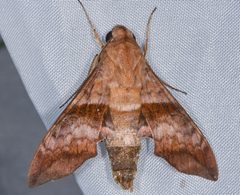
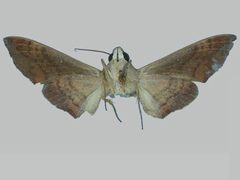
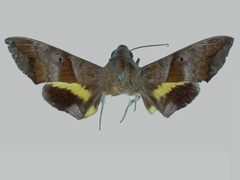
Perigonia lusca is a medium-sized sphinx moth with a wingspan of 55–65 mm. It occurs from the northern tip of South America through Central America to Florida, with multiple annually in southern Florida and year-round activity in tropical regions. The "coffee sphinx" derives from larval feeding on Coffea arabica and related plants.
Pronunciation
How to pronounce Perigonia lusca: //pɛrɪˈɡoʊniə ˈlʌskə//
These audio files are automatically generated. While they are not always 100% accurate, they are a good starting point.
Identification
Wingspan 55–65 mm. Specific diagnostic features distinguishing it from are not documented in available sources.
Images
Habitat
Tropical and subtropical regions; specific associations are not well documented.
Distribution
Northern South America through most of Central America to Florida, United States. Also recorded on the Galápagos Islands, Revillagigedo Island, and Soccoro Island (Mexico).
Seasonality
Multiple per year in southern Florida. recorded in April and July on the Galápagos Islands. Year-round adult activity probable in tropical regions.
Diet
Larvae feed on Guettarda macrosperma, Guettarda scabra, Coffea arabica and other Coffea , Ilex krugiana, Ilex paraguariensis, Genipa americana, Rondeletia species, Gonzalagunia spicata and other Gonzalagunia species, and Cinchona succirubra. feeding habits are not documented.
Life Cycle
Several per year in southern Florida; multivoltine.
Human Relevance
Larval feeding on Coffea arabica (coffee) creates minor agricultural association; not documented as a significant pest.