Hemileuca lucina
H. Edwards, 1887
New England buck moth
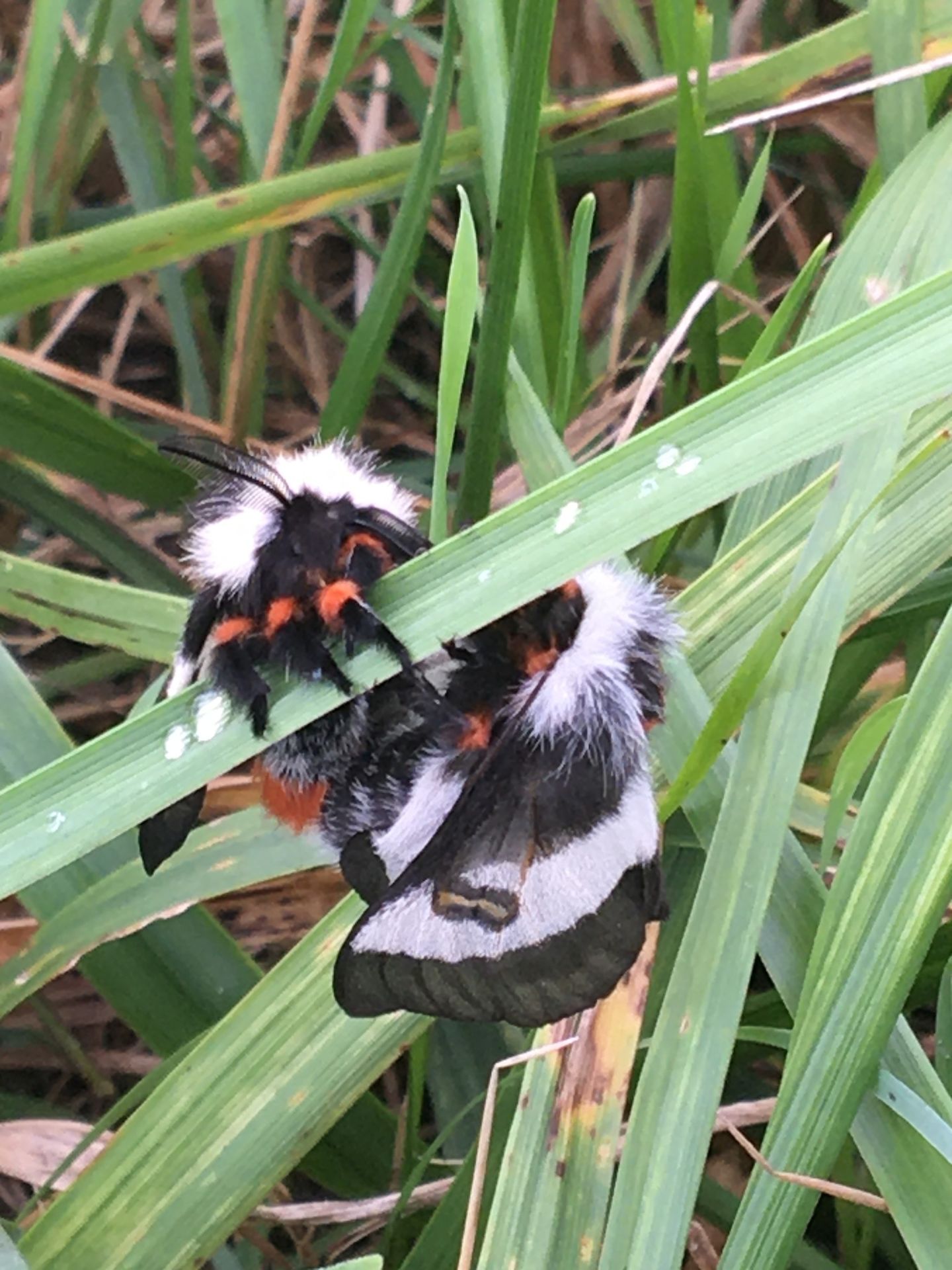
Hemileuca lucina, the New England buck , is a day-flying saturniid moth to the New England region of the United States. The is with emerging in September for a season lasting approximately two weeks. Larvae possess urticating spines that can cause painful dermatitis and exhibit a developmental shift from gregarious defensive in early instars to solitary escape behavior in late instars. The species was historically confused with its sister species Hemileuca maia until subtle differences in wing translucence and band width were recognized.
Pronunciation
How to pronounce Hemileuca lucina: /ˌhɛmɪˈluːkə luːˈkiːnə/
These audio files are automatically generated. While they are not always 100% accurate, they are a good starting point.
Identification
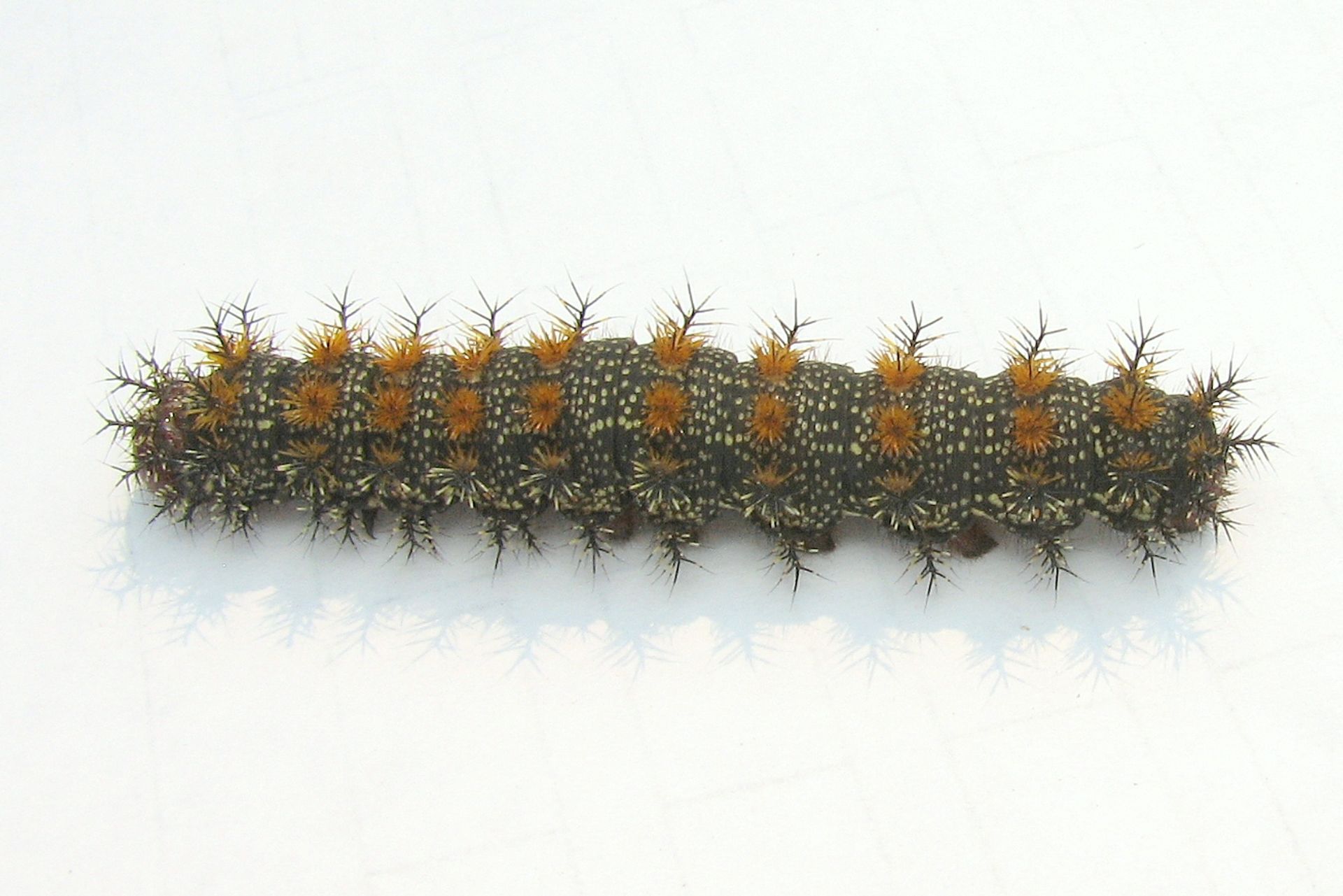
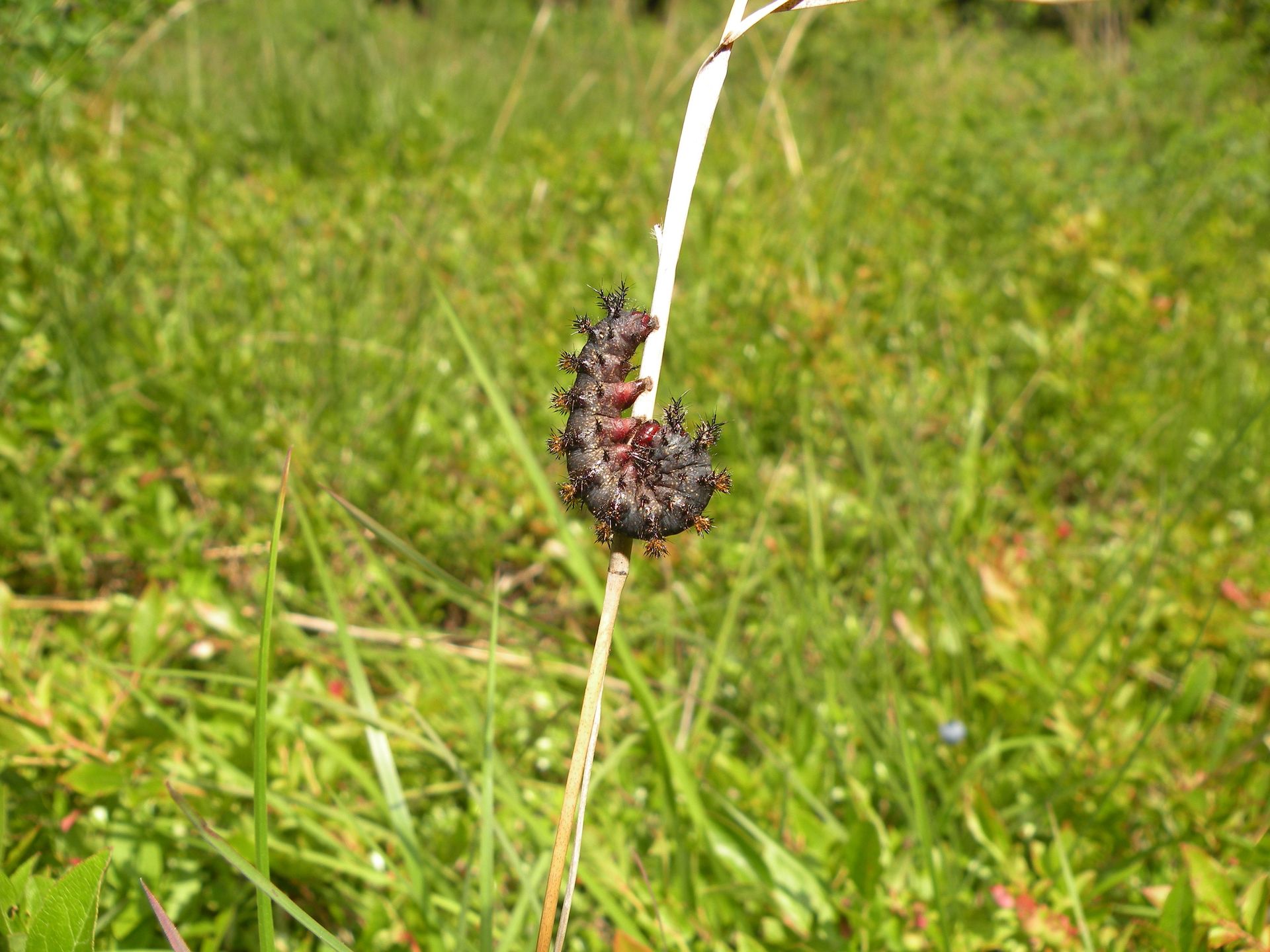
Hemileuca lucina can be distinguished from its sister Hemileuca maia by its more translucent wings and wider white forewing bands; H. maia is darker with narrower bands bearing circular spots. Compared to Hemileuca nevadensis, H. lucina has less convex white forewing bands and greater wing translucence; H. nevadensis is generally more opaque. Larvae are smaller than H. maia larvae and possess a sharply defined white stripe above the feet that is faint or absent in H. maia.
Images
Habitat
Wet meadows in the New England region. The is highly local and restricted to specific meadow despite its plants having broader ranges.
Distribution
to the New England region of the United States, specifically documented from Maine, New Hampshire, and Massachusetts. Distribution is not fully understood due to restricted range and local fluctuations.
Seasonality
fly in September for approximately two weeks. Males fly in late morning with mating occurring between 10:00 am and 1:00 pm. overwinter and hatch in May; larval development occurs May through July. occurs during summer.
Diet
Early instar larvae feed primarily on meadowsweet (Spiraea latifolia). Later instars expand to include blackberry (Rubus ), cinquefoil (Potentilla species), and black cherry. Third instar larvae prefer and show increased growth on new leaves compared to mature leaves. females do not feed; adult male feeding patterns require further study.
Host Associations
- Spiraea latifolia - primary larval Early instar feeding; preferred oviposition site
- Rubus - larval Late instar feeding
- Potentilla - larval Late instar feeding
- Prunus serotina - larval Late instar feeding, referred to as black cherry
Life Cycle
with one per year. are laid in September in ring-like batches averaging 146 eggs per batch on plant twigs, overwinter, and hatch in May. Six larval instars occur from May through July: instars I–III are gregarious, instars IV–V are transitional with decreasing , and instar VI is solitary. occurs in soil during summer. emerge in September.
Behavior
Larvae exhibit developmental behavioral plasticity: early instars (I–III) display defensive including thrashing, biting, and regurgitation when threatened, and aggregate in groups for protection; late instars (IV–VI) shift to escape behaviors including dropping from plants or curling tightly on vegetation, and become solitary. Attacked larvae stimulate group members: thrashing or -rearing in early instars stimulates defensive responses in others, while dropping in late instars stimulates escape responses. Females expand wings as a signal for production to attract males. Copulation lasts approximately one to two hours.
Ecological Role
Larvae serve as prey for , stinkbugs, and spiders, and as for tachinid flies and ichneumonid wasps. The ' restricted distribution and local fluctuations make it vulnerable to environmental changes.
Human Relevance
Larvae can cause painful stings and dermatitis through contact with urticating spines, warranting caution. The is of conservation concern due to its restricted range and vulnerability to management practices such as prescribed burning, which can cause high mortality in localized .
Similar Taxa
- Hemileuca maiaSister with nearly identical larval and appearance; distinguished by darker coloration, narrower white forewing bands with circular spots, and less wing translucence in adults; larvae lack the sharply defined white stripe above the feet present in H. lucina
- Hemileuca nevadensisMember of the same group with similar appearance; distinguished by wider, more convex white forewing bands and greater wing opacity in
More Details
Conservation vulnerability
The ' extremely restricted geographic range and local make it susceptible to local extirpation from management practices. A documented case of late May prescribed burning at an Iowa site resulted in near-total mortality of a Hemileuca nevadensis , highlighting the risk of in-season burns to closely related species with similar .
Interspecific mating
Males cannot distinguish between of H. lucina and H. nevadensis, resulting in documented interspecific mating attempts.
Egg characteristics
Individual weigh 1.13–1.89 mg (mean 1.63 mg). Egg weight declines with female age, though effects on larval are unknown. Oviposition location on twig periphery correlates with greater sunlight exposure.
Sources and further reading
- BugGuide
- Wikipedia
- GBIF taxonomy match
- iNaturalist taxon
- NCBI Taxonomy
- Catalogue of Life
- Sheep Moths Draw Attention at Bohart Museum of Entomology Open House | Bug Squad
- Look but do not touch: puss caterpillar, Megalopyge opercularis; White flannel moth, Norape ovina; Io moth, Automeris io; buck moth Hemileuca spp.; and hag moth, Phobetron pithecium — Bug of the Week
- Saving St Helena’s Bugs on the Brink: Building the Capability of a Budding Conservationist - Buglife Blog - Buglife
- Bug Eric: Giant Silkmoths
- Are we loving our prairies/glades/woodlands to death? | Beetles In The Bush
- Developmental change in aggregation, defense and escape behavior of buckmoth caterpillars, Hemileuca lucina (Saturniidae)