
Syssphinx montana
Packard, 1905
Montana Silkmoth
Syssphinx montana is a silkmoth in the Saturniidae. have a wingspan of 62–82 mm, with males smaller than females. The is found in Mexico and rarely in southeastern Arizona. Adults are active from mid-July to early August and do not feed. Larvae feed on several leguminous plants.
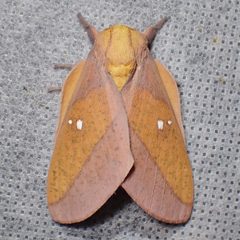
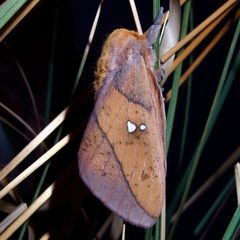
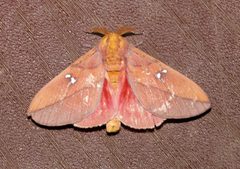
Pronunciation
How to pronounce Syssphinx montana: /sɪsˈsɪŋks mɒnˈtɑːnə/
These audio files are automatically generated. While they are not always 100% accurate, they are a good starting point.
Identification
can be separated from the closely related Syssphinx hubbardi by distribution and subtle morphological characters. Larvae are cryptic and highly variable in coloration; they are nearly identical to S. hubbardi larvae and cannot be reliably distinguished in the field or from photographs. Rearing to adulthood or molecular methods are required for definitive identification of larvae.
Images
Habitat
Found in regions supporting its larval plants, which include leguminous trees and shrubs. Specific preferences for are not well documented.
Distribution
Mexico; rarely in southeastern Arizona, United States. Records indicate presence in Middle America and North America.
Seasonality
on wing from mid-July to early August. One per year assumed based on related , though not explicitly documented.
Diet
Larvae feed on Haematoxylum brasiletto, Cassia emarginata, Acacia farnesiana, Gleditsia triacanthos, and Robinia pseudoacacia. do not feed.
Host Associations
- Haematoxylum brasiletto - larval food plant
- Cassia emarginata - larval food plant
- Acacia farnesiana - larval food plant
- Gleditsia triacanthos - larval food plant
- Robinia pseudoacacia - larval food plant
Life Cycle
Complete with , larva, pupa, and stages. Larvae pupate underground in a shallow . Adults emerge in early evening and seek mates between 11 PM and 2 AM, based on observations of congeneric S. hubbardi. One per year throughout most of range, inferred from related .
Behavior
are and attracted to light. Mating occurs in late night hours. Larvae feed actively at night.
Ecological Role
Larval herbivore on leguminous plants. do not feed and have minimal ecological role beyond . Specific ecological interactions are not documented.
Human Relevance
Occasional subject of interest to enthusiasts and collectors. Rare in the United States, making it a notable find for lepidopterists in southeastern Arizona. Not known to be of agricultural or economic significance.
Similar Taxa
- Syssphinx hubbardiLarvae are nearly identical in appearance and difficult to separate; differ in geographic range and subtle morphological characters. S. hubbardi occurs from central Texas west to southern California and south to Veracruz, with some range overlap in Arizona.
More Details
Taxonomic Note
Some references use the name Sphingicampa instead of Syssphinx for this . Syssphinx montana is the currently accepted combination.
Larval Identification Caution
Field identification of larvae as S. montana versus S. hubbardi is not reliable. Photographs and visual inspection alone are insufficient; rearing to adulthood or molecular analysis is required for definitive identification.
Sources and further reading
- BugGuide
- Wikipedia
- GBIF taxonomy match
- iNaturalist taxon
- NCBI Taxonomy
- Catalogue of Life
- Bumble Bee Mellowing Out on the Mallow | Bug Squad
- Little Spurthroated Grasshopper
- Bug Eric: Moth Monday: Hubbard's Silkmoth
- Study Identifies Areas in U.S. Most Suitable for Invasive Giant Hornet
- Cattle Grazing Helps Pollinators in Sagebrush Rangelands
- Cicadas Race to Catch Up With Their Evolving Endosymbionts