
Syssphinx hubbardi
Dyar
Hubbard's Silk Moth, Hubbard's Silkmoth
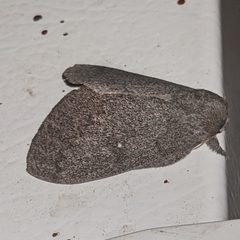
Syssphinx hubbardi is a medium-sized giant silk in the Saturniidae, with a wingspan of 56–76 mm. are predominantly gray with bright pink hindwings that are exposed when the moth is startled. The occurs in the southwestern United States and Mexico, with one per year in most of its range, though Texas may produce multiple generations. Adults are active from June through September, with peak activity in July and August.
Pronunciation
How to pronounce Syssphinx hubbardi: //ˈsɪs.fɪŋks hʌˈbɑːr.di//
These audio files are automatically generated. While they are not always 100% accurate, they are a good starting point.
Identification
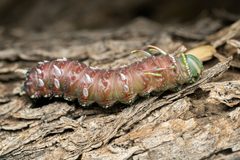
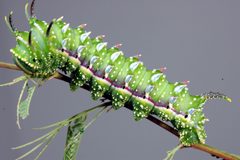
Distinguished from other Syssphinx by geographic range and gray coloration with pink hindwings. Caterpillars are nearly identical to Syssphinx montana and difficult to separate in the field or from photographs; identification requires rearing to adult or molecular analysis. Smaller than many familiar Saturniidae such as Actias luna or Hyalophora cecropia.
Images
Appearance
are gray overall with bright pink hindwings concealed beneath the forewings; pink coloration is exposed when the is disturbed. Wingspan ranges from 56–76 mm, with females larger than males. Males are frequently attracted to lights at night. Caterpillars are approximately 55 mm at maturity, green with numerous white dots and a violet line running across the body; young larvae are cryptic, sitting individually on leaf undersides, while older larvae cut petioles to bend leaves downward for feeding.
Habitat
Found in desert scrub and arid woodland , particularly areas with mesquite, acacia, and palo verde. Associated with riparian corridors in oak/juniper woodland in southeastern Arizona. Elevation range extends from low desert to higher mountain canyons.
Distribution
Central Texas west through southern New Mexico and Arizona to southern California (mountain ranges of northeastern San Bernardino County); south through Mexico to Veracruz. Specific U.S. records include Texas, Arizona, New Mexico, and California.
Seasonality
on the wing primarily June through September, with peak activity in July and August. In Texas, adults have been recorded at lights in November, suggesting possible partial second . Caterpillars observed feeding actively at night; adults emerge in early evening and seek mates between 11 PM and 2 AM.
Diet
Larval : Prosopis glandulosa (honey mesquite), Senegalia greggii (catclaw acacia), and Parkinsonia microphylla (little-leaf palo verde). In captivity, larvae have been reared on Gleditsia triacanthos (honey locust), Robinia pseudoacacia (black locust), and Parkinsonia (Jerusalem thorn). do not feed.
Host Associations
- Prosopis glandulosa - larval honey mesquite
- Senegalia greggii - larval catclaw acacia
- Parkinsonia microphylla - larval little-leaf palo verde; formerly Cercidium microphyllum
- Gleditsia triacanthos - larval honey locust; accepted in captivity
- Robinia pseudoacacia - larval black locust; accepted in captivity
- Parkinsonia aculeata - larval Jerusalem thorn; accepted in captivity
Life Cycle
hatch into larvae that feed nocturnally on foliage. Some individuals complete development from egg to pupa in under three weeks, while others from the same batch take longer. Mature larvae pupate underground in shallow , where they overwinter. emerge in early evening and are active from 11 PM to 2 AM. One per year throughout most of range; evidence suggests possible multiple generations in Texas.
Behavior
Males strongly attracted to light sources at night, even in urban environments. Caterpillars are strictly feeders. When startled, expose bright pink hindwings, likely as a startle display. Adults are /nocturnal, with peak mating activity in late-night hours.
Ecological Role
Larval herbivore on woody leguminous plants in desert ; contributes to nutrient cycling through herbivory. serve as prey for including bats and owls. Underground pupal may provide microhabitat for other soil organisms.
Human Relevance
Subject of interest among enthusiasts and silk moth rearers; rearing records have expanded knowledge of plant flexibility. No significant economic impact; not considered a pest of agriculture or forestry. Occasionally encountered at residential lights in urban areas of Tucson and other southwestern cities.
Similar Taxa
- Syssphinx montanaCaterpillars nearly identical in appearance and difficult to distinguish in field or from photographs; requires rearing to for positive identification
- Other Saturniidae (Actias luna, Hyalophora cecropia, Antheraea polyphemus)Much larger body size and different coloration; S. hubbardi is notably smaller with gray rather than green or brown coloration
Misconceptions
Some references use the name Sphingicampa rather than Syssphinx; the latter is currently accepted. The bright pink hindwings are often unexpected given the drab gray forewings, leading to surprise when the is disturbed.
More Details
Nomenclature note
The has been transferred between , with Sphingicampa hubbardi appearing in older literature. Current places it in Syssphinx.
Developmental plasticity
Larvae from the same batch show variable development rates, with some completing in under three weeks while others take substantially longer; the basis for this variation is unknown.
Captive rearing
enthusiasts have successfully reared this on non-native including honey locust and black locust, demonstrating broader dietary than wild exhibit.