
Syssphinx
Hübner, 1819
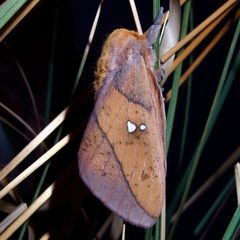
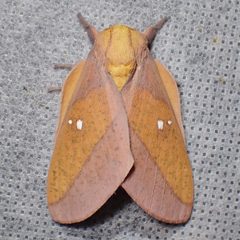
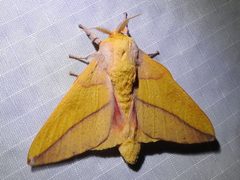
Royal Moths, Hubbard's Silkmoth (S. hubbardi)
Species Guides
8- Syssphinx albolineata
- Syssphinx bicolor(honey locust moth)
- Syssphinx bisecta(Bisected Honey Locust Moth)
- Syssphinx blanchardi
- Syssphinx heiligbrodti(Heiligbrodt's Mesquite Moth)
- Syssphinx hubbardi(Hubbard's Silk Moth)
- Syssphinx montana(Montana Silkmoth)
- Syssphinx raspa(Raspa Small Silkmoth)
Syssphinx is a of medium-sized giant silk moths in the Saturniidae, containing approximately 30 described distributed across North and Central America. The genus was established by Jacob Hübner in 1819. Species range from the southwestern and south-central United States through Mexico to Central America and northern South America. typically have subdued forewing coloration with brightly colored hindwings that are exposed when the is disturbed. The genus includes economically significant species such as S. molina, a defoliator of parica tree plantations in the Brazilian Amazon.
Pronunciation
How to pronounce Syssphinx: //sɪsˈsfɪŋks//
These audio files are automatically generated. While they are not always 100% accurate, they are a good starting point.
Identification
Medium-sized Saturniidae with wingspans generally 50–90 mm; forewings typically gray or brown with variable patterning, hindwings often bright pink, orange, or yellow concealed at rest and exposed when startled. bipectinate in both sexes but more broadly so in males. Body robust with dense scaling. Larvae possess paired on most segments and a caudal horn on the terminal segment; coloration highly variable within and between , ranging from green with yellow or red markings to nearly black.
Images
Habitat
Diverse including desert scrub, oak-juniper woodland, riparian corridors, and tropical forests; -specific associations with plants in Fabaceae (acacias, mesquites, locusts) and other .
Distribution
Southwestern and south-central United States (Texas, New Mexico, Arizona, California) south through Mexico to Guatemala, Honduras, and Panama; also South America including Ecuador, Venezuela, Suriname, and Brazil (Amazon region).
Seasonality
generally active during summer months (June–September) in temperate regions; some southern may have multiple with adults recorded into November. Tropical may have more extended or year-round periods correlated with rainy seasons.
Diet
Larvae feed on foliage of woody legumes and related plants; specific include Acacia greggii (catclaw acacia), Prosopis glandulosa (honey mesquite), Cercidium microphyllum (little-leaf palo verde), Schizolobium parahyba var. amazonicum (parica tree), and various Ficus, Cassia, Inga, and Eucalyptus . have non-functional mouthparts and do not feed.
Life Cycle
Complete with one per year in temperate regions; stage approximately 5–6 days, larval stage with five instars lasting 30–35 days, pre-pupal stage 2–3 days, pupal stage 16–17 days (or ), longevity 7–10 days. occurs underground in a shallow earthen . Some tropical may complete multiple generations annually.
Behavior
Larvae feed nocturnally; young larvae sit individually on leaf undersides, older larvae cut petioles and bend leaves downward to access foliage. fly at night, males attracted to light. Mating occurs between 11 PM and 2 AM. Adults are startle-display , exposing brightly colored hindwings when disturbed.
Ecological Role
Larval defoliators of native woody plants; S. molina has become a significant plantation pest in Brazil where parica tree create favorable conditions. Contributes to nutrient cycling through herbivory and serves as prey for birds, bats, and .
Human Relevance
S. molina is the second most damaging insect pest of parica tree (Schizolobium parahyba var. amazonicum) plantations in Pará state, Brazil, causing affecting 100–700 hectares during 2004–2008. Other are collected by enthusiasts and occasionally encountered in urban areas attracted to lights. Rearing of silk moths is a popular hobby activity.
Similar Taxa
- EaclesBoth are Saturniidae with robust bodies and bright hindwing coloration, but Eacles are generally larger with more elaborate eyespot patterns on wings and different larval arrangements.
- AnisotaSimilar size range and bipectinate , but Anisota larvae lack the caudal horn present in Syssphinx and typically have more uniform wing coloration without concealed bright hindwings.
- Sphingicampa (as historically applied)Former name for some Syssphinx ; current places these species within Syssphinx based on shared morphological and molecular characteristics.
Sources and further reading
- BugGuide
- Wikipedia
- GBIF taxonomy match
- iNaturalist taxon
- NCBI Taxonomy
- Catalogue of Life
- Bug Eric: Moth Monday: Hubbard's Silkmoth
- Belostomatidae | Beetles In The Bush
- Syssphinx Larvae of the Lower Rio Grande Valley of Texas with Emphasis on the Life History of Syssphinx tamaulipasiana
- Biological and morphometric aspects and rearing of Syssphinx molina (Cramer) (Lepidoptera: Saturniidae), a defoliator of parica tree