
Anisota consularis
Dyar, 1896
Florida oakworm moth, consular oakworm moth
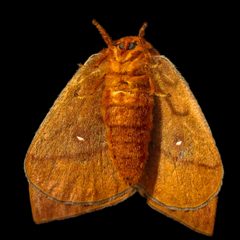
Anisota consularis is a saturniid native to southeastern North America. Larvae feed on oak foliage, often in gregarious groups, and can cause noticeable defoliation during years. The was described by Harrison Gray Dyar Jr. in 1896 and is distinguished from related oakworms by its more restricted Florida-centered distribution.
Pronunciation
How to pronounce Anisota consularis: /ˌænɪˈsoʊtə kɒnˈsʊlərɪs/
These audio files are automatically generated. While they are not always 100% accurate, they are a good starting point.
Identification
Distinguished from the more widespread Anisota senatoria (orangestriped oakworm) by geographic range—A. consularis occurs primarily in Florida and adjacent southeastern states. have reduced or absent pink striping compared to A. virginiensis. Larvae are similar to other Anisota : black with orange or yellow longitudinal stripes, and possess paired fleshy horns behind the .
Images
Habitat
Deciduous forests and urban landscapes with oak trees, particularly in sandy or well-drained soils suitable for .
Distribution
Southeastern United States, primarily Florida and adjacent Georgia. Records from North America per GBIF.
Seasonality
emerge in spring (May–June) from pupae. Larvae feed through summer; second may occur in southern parts of range.
Diet
Larvae feed on oak foliage (Quercus spp.), including live oak and other southeastern oak .
Host Associations
- Quercus - primary larval food plant
Life Cycle
Overwinters as pupa in soil. emerge in spring, mate, and females deposit on undersides of oak leaves. Larvae feed gregariously, initially skeletonizing leaves, later consuming entire foliage except midveins. Mature larvae drop to ground and burrow into soil to pupate. Second may occur in Deep South.
Behavior
Larvae feed in conspicuous clusters, making them highly visible when present. Mature larvae wander down tree trunks to find sites in soil.
Ecological Role
Defoliator of oaks; serves as prey for and other natural enemies. naturally regulated by parasitoids and .
Human Relevance
Occasional pest of ornamental oaks in Florida; can cause aesthetic damage and accumulate on sidewalks and patios. Rarely causes significant tree mortality.
Similar Taxa
- Anisota senatoriaOverlapping range in southeastern states; distinguished by more northern distribution and slightly different coloration
- Anisota virginiensisSimilar larval appearance; have more prominent pink striping and broader eastern distribution
- Anisota stigmaOccurs in overlapping range; distinguished by wing patterns and larval coloration details
Sources and further reading
- BugGuide
- Wikipedia
- GBIF taxonomy match
- iNaturalist taxon
- Catalogue of Life
- Outrage for oaks – Orangestriped Oakworm, Anisota senatoria — Bug of the Week
- Trails of despair for wild silk moth caterpillars: Orangestriped Oakworm, Anisota senatoria, and Greenstriped mapleworm, Dryocampa rubicunda — Bug of the Week
- Much Ado About Nothing? End-of-Summer Defoliation Heats Up
- Megalopygidae | Beetles In The Bush
- Predatory Wasps and Citizen Scientists are Taking on the Emerald Ash Borer
- ID Challenge #11 | Beetles In The Bush