
Macroxyelinae
macroxyelid sawflies
Genus Guides
2Macroxyelinae is a small of within the Xyelidae, one of the most basal lineages of Hymenoptera. The group contains two extant , Macroxyela and Megaxyela, with approximately six described . These insects are characterized by their relatively large body size compared to other xyelid sawflies and their association with specific plants, primarily hickories and walnuts (Juglandaceae). Macroxyelinae represents an ancient relict lineage with a primarily Holarctic distribution.
Pronunciation
How to pronounce Macroxyelinae: /ˌmækroʊˈksaɪlɪni/
These audio files are automatically generated. While they are not always 100% accurate, they are a good starting point.
Identification
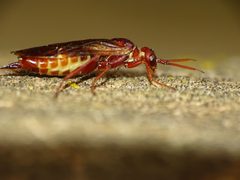
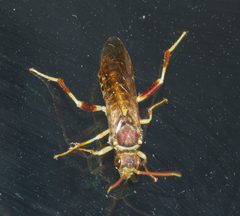
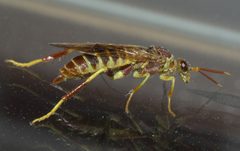
Macroxyelinae can be distinguished from other Xyelidae by their larger body size (10–25 mm), more robust build, and the presence of 9-segmented in females (versus 10-segmented in most other xyelids). The is further characterized by a distinctively elongated third antennal segment and reduced wing venation compared to more derived . Megaxyela possess uniquely enlarged hind with teeth, a trait absent in Macroxyela and all other xyelids.
Images
Habitat
in this are associated with deciduous forests and woodland edges where their plants occur. are often found on or near the foliage of hickories (Carya) and walnuts (Juglans), while larvae develop within the developing fruits or shoots of these trees.
Distribution
Holarctic distribution, with records from eastern North America (Macroxyela) and East Asia including Japan, Korea, and China (Megaxyela). The has a disjunct distribution reflecting the geographic separation of its constituent .
Seasonality
are active in spring, typically emerging with the new growth of plants. In North America, Macroxyela are observed from April through June, with peak activity coinciding with hickory flowering and leaf expansion.
Diet
Larvae feed internally on the developing fruits, buds, or shoots of Juglandaceae, specifically hickories (Carya) and walnuts (Juglans). have been observed feeding on pollen, though detailed adult feeding remains poorly documented.
Host Associations
- Carya - larval developing fruits and shoots
- Juglans - larval developing fruits and shoots
Ecological Role
As specialized herbivores on Juglandaceae, Macroxyelinae larvae function as seed and bud , potentially influencing tree reproductive success. Their basal phylogenetic position within Hymenoptera makes them of interest for understanding the evolution of plant-insect associations in early sawfly lineages.
Human Relevance
Macroxyela larvae occasionally cause minor damage to commercial hickory and walnut crops, but economic impact is generally negligible. The group is of scientific interest due to its phylogenetic significance as a relict lineage.
Similar Taxa
- XyelinaeOther of Xyelidae; distinguished by smaller body size, 10-segmented female , and different plant associations (primarily conifers and diverse angiosperms)
- PamphiliidaeAnother basal with larvae in plant tissues; distinguished by different wing venation, capsule structure, and larval (leaf-rolling rather than internal feeding)