
Macroxyela
Kirby, 1882
Species Guides
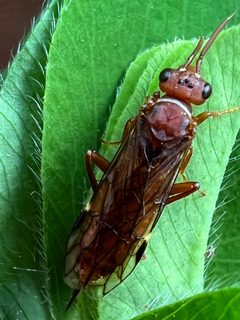
1Macroxyela is a of in the Xyelidae, the oldest living family of Hymenoptera. These primitive sawflies are characterized by their relatively large size compared to other xyelids and distinctive with elongated third segments. The genus comprises several distributed primarily in the Holarctic region. Macroxyela species are associated with coniferous trees, particularly pines, where larvae feed on pollen and developing cones.
Pronunciation
How to pronounce Macroxyela: /ˌmækroʊˈzaɪlə/
These audio files are automatically generated. While they are not always 100% accurate, they are a good starting point.
Identification
Distinguished from other Xyelidae by the elongated third antennal segment, which is notably longer than the combined length of the first two segments. Larger overall body size separates Macroxyela from the smaller genus Xyela. The genus Pleroneura lacks the elongated third antennomere and has different wing venation patterns. Identification to level requires examination of genitalia and detailed wing venation characters.
Images
Habitat
Associated with coniferous forests, particularly pine-dominated woodlands. are found in and subcanopy layers where trees occur. Larval development occurs within male cones of host conifers.
Distribution
Holarctic distribution, with occurring in North America and Eurasia. North American records include eastern and western regions. Eurasian distribution includes temperate and zones.
Seasonality
activity coincides with pollen shed of conifers, generally spring to early summer depending on latitude and elevation. Peak typically occurs when male cones are receptive.
Diet
Larvae feed on pollen and tissues of developing male cones of Pinus and related conifer . do not feed; they rely on energy reserves accumulated during larval development.
Host Associations
- Pinus - larval food plantPrimary ; larvae develop within male cones
Life Cycle
Complete with distinct , larval, pupal, and stages. Eggs are deposited into male conifer cones. Larvae feed internally on pollen and cone tissues, passing through several instars. occurs in soil or leaf litter. Adults are short-lived and do not feed. with one per year.
Behavior
are and active during warm periods of the day. Males are known to form near trees. Females locate male cones using olfactory cues to deposit . Adults are weak fliers relative to other , typically remaining near host trees.
Ecological Role
Pollen consumers in conifer ; larvae function as minor herbivores of reproductive structures. May serve as prey for . Contribution to nutrient cycling through cone tissue consumption is limited due to low densities.
Human Relevance
No significant economic importance. Occasionally encountered by forest entomologists and collectors due to phylogenetic significance as primitive hymenopterans. Not considered a pest of forestry; feeding damage to cones is minimal and non-commercial.
Similar Taxa
- XyelaSmaller body size and third antennal segment not elongated; larvae feed on similar but distinguished by antennal structure
- PleroneuraLacks elongated third antennomere; different wing venation and associated with different conifer
More Details
Phylogenetic significance
Macroxyela belongs to Xyelidae, the sister group to all other Hymenoptera, making it important for understanding early evolution of the order. The retains many plesiomorphic characteristics including the distinctive and wing venation patterns.
Taxonomic history
Described by William Kirby in 1882, the has undergone relatively stable classification within Xyelidae, though -level has been revised based on genitalic and molecular data.