
Pseudomasaris maculifrons
(Fox, 1894)
pollen wasp
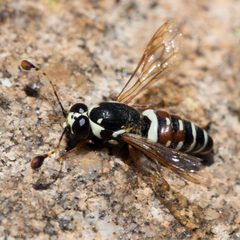
Pseudomasaris maculifrons is a solitary pollen wasp in the Vespidae, Masarinae. Unlike predatory social , females construct mud nests provisioned with pollen and nectar rather than insect prey. Males exhibit distinctive , perching repeatedly in the same locations on isolated peaks to await females. The occurs in western North America and is active primarily in spring.
Pronunciation
How to pronounce Pseudomasaris maculifrons: /ˌsjuːdoʊˈmeɪsərɪs ˌmækjʊlɪˈfrɒnz/
These audio files are automatically generated. While they are not always 100% accurate, they are a good starting point.
Identification
Males recognized by long, clubbed ; females have shorter, clubbed antennae. Distinguished from other vespid by absence of longitudinal fold on when at rest. Distinguished from Pseudomasaris vespoides by male (patrolling peaks) versus patrolling flower patches.
Images
Habitat
Arid and semi-arid regions of western North America; associated with hilltop summits and buttes for male mating territories. Nests constructed beneath stones or in sheltered situations.
Distribution
Western North America, including Arizona and surrounding regions.
Seasonality
Active February through May; males may occupy same hilltop locations for up to 29 days.
Diet
Females provision nests with pollen and nectar, primarily from flowers in Penstemon, Phacelia, and Eriodictyon. This oligolectic relationship represents a specialized pollination mutualism.
Life Cycle
Solitary nesting; female constructs mud nest of several , each provisioned with pollen and nectar and containing one . Development occurs within cells; no social colony structure.
Behavior
Males exhibit , perching repeatedly in same small areas on isolated peaks day after day to defend territories and intercept females. Males less belligerent than some other hilltopping insects such as black swallowtails or bot flies. Between February and May, different of males occupy same locations in different years.
Ecological Role
of specialized plant including Penstemon, Phacelia, and Eriodictyon through oligolectic pollen collection. Nests subject to by cuckoo wasps including Chrysurissa densa.
Similar Taxa
- Pseudomasaris vespoidesSimilar size and coloration to yellowjackets; distinguished by male (patrolling flower patches versus ) and nesting habits (P. vespoides attaches nests to twigs in open, P. maculifrons nests beneath stones).
- Vespula maculifrons (Eastern yellowjacket)Similar black and yellow coloration and body size; distinguished by social , predatory diet, papery nest construction, and presence of longitudinal abdominal fold at rest.
Sources and further reading
- BugGuide
- GBIF taxonomy match
- iNaturalist taxon
- Catalogue of Life
- Bug Eric: More Hilltopping Insects
- Bug Eric: November 2011
- Summer stingers – Eastern yellowjackets, Vespula maculifrons — Bug of the Week
- Feeling yellow - Yellow Jackets, Vespula maculifrons — Bug of the Week
- Be careful around yellowjackets: Eastern yellowjackets, Vespula maculifrons — Bug of the Week
- From the mailbag - When spotted lanternflies arrive, do stinging insects follow? Eastern yellowjackets, Vespula maculifrons, and a few other friends — Bug of the Week