
Ancistrocerus spilogaster
Cameron, 1905
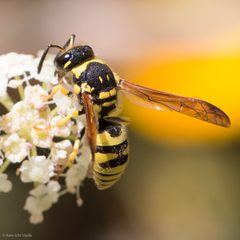
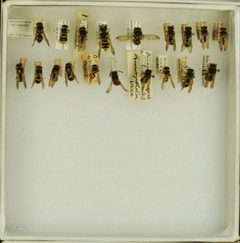
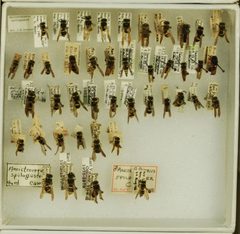
Ancistrocerus spilogaster is a solitary mason wasp in the Eumeninae, described by Cameron in 1905. As with other members of the Ancistrocerus, it exhibits the diagnostic transverse carina on the first abdominal . The is part of a diverse genus of potter and mason wasps that construct nests using mud and provision with paralyzed caterpillars for their developing larvae. Specific biological details for A. spilogaster remain poorly documented in published sources.
Pronunciation
How to pronounce Ancistrocerus spilogaster: /ænˌsɪstroʊˈsɛrəs ˌspaɪloʊˈɡæstər/
These audio files are automatically generated. While they are not always 100% accurate, they are a good starting point.
Identification
Members of the Ancistrocerus can be distinguished from other eumenine genera by the prominent transverse carina (ridge) on the base of the first abdominal segment (T1), creating an abrupt angle that the rear of the . Other genera typically show a more gradual abdominal slope toward the thorax. Without specimen examination or -level diagnostic resources, distinguishing A. spilogaster from is not possible from the provided sources.
Images
Similar Taxa
- Ancistrocerus unifasciatusShares the diagnostic transverse carina on T1 and similar overall mason wasp , but differs in abdominal color pattern—A. unifasciatus typically shows a single yellow band on the versus the pattern implied by the specific epithet 'spilogaster' (spotted belly).
- Ancistrocerus campestrisSimilar -level characters including the T1 carina; A. campestris has yellow hind margins on the first three abdominal segments and specific prey associations with leaf-tier caterpillars, which may differ from A. spilogaster.
- Ancistrocerus waldeniiCongeneric mason wasp with similar nesting using mud , but A. waldenii constructs free-form mud nests attached to hard surfaces and shows distinct white or yellow abdominal banding patterns.
Sources and further reading
- BugGuide
- GBIF taxonomy match
- iNaturalist taxon
- Catalogue of Life
- Bug Eric: Wasp Wednesday: Walden's Mason Wasp, Ancistrocerus waldenii
- Bug Eric: How to (Almost) Catch a Leaf-tier Caterpillar (Video)
- Bug Eric: How to Catch a Leafroller Caterpillar (Video)
- Bug Eric: Eight Illinois Wasp and Bee Mimics in Twenty Minutes
- Bug Eric: City Nature Challenge 2023 Recap