
Blennocampini
Konow, 1903
Genus Guides
4- Apareophora
- Eupareophora(spiny ash sawflies)
- Monophadnoides(raspberry sawfly)
- Periclista(common sawflies)
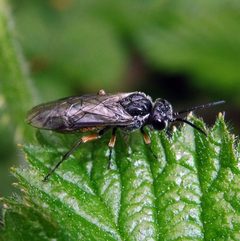
Blennocampini is a tribe of within the Tenthredinidae. Larvae of this group possess distinctive (forked) cuticular projections that distinguish them from many other sawfly larvae. The tribe includes such as Periclista, which are associated with woody plants including oaks. are small to medium-sized sawflies with typical tenthredinid .
Pronunciation
How to pronounce Blennocampini: /ˌblɛn.oʊˈkæm.pɪ.naɪ/
These audio files are automatically generated. While they are not always 100% accurate, they are a good starting point.
Identification
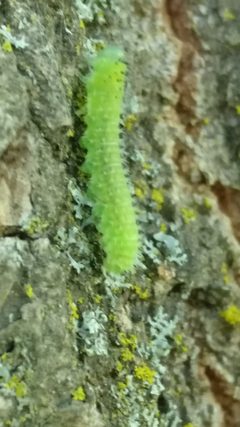
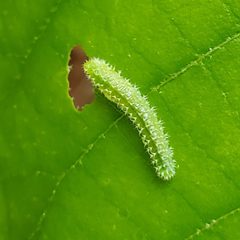
Larvae are distinguished from Lepidoptera caterpillars by the presence of projections and greater number of (6-8 pairs on , versus 5 or fewer in Lepidoptera). The forked, fleshy dorsal processes are particularly characteristic of Periclista and related within this tribe. require examination of wing venation, structure, and genitalia for definitive identification to tribe level.
Images
Habitat
Larvae are found on plants, particularly woody vegetation including oaks (Quercus ) and other trees or shrubs. occur in wooded areas, forests, and landscapes where host plants are present.
Distribution
Primarily distributed in the Nearctic region, with records from North America including the eastern and central United States. Some may have broader distributions in the Holarctic.
Seasonality
activity and larval presence likely coincide with plant growing seasons, typically spring through summer. Specific timing varies by and latitude.
Diet
Larvae feed on foliage of woody plants, particularly oaks (Quercus).
Host Associations
- Quercus - larval food plantprimary for Periclista
Life Cycle
Holometabolous development with , larva, pupa, and stages. Larvae are external feeders on leaves. occurs in soil or protected locations. Adults emerge to mate and oviposit on plants.
Behavior
Larvae are external leaf feeders. When disturbed, may exhibit defensive typical of larvae. The projections may serve defensive functions, though this has not been experimentally confirmed.
Ecological Role
Herbivores that contribute to leaf damage on trees. Serve as prey for various and . Role in nutrient cycling through herbivory and production.
Human Relevance
Minor economic significance; larvae may cause noticeable defoliation on ornamental oaks or in forest settings but are generally not severe pests. Of interest to entomologists and naturalists due to distinctive larval .
Similar Taxa
- Lepidoptera larvaeBoth have caterpillar-like larvae with fleshy projections, but Lepidoptera have 5 or fewer pairs of abdominal with (hooked spines), while Blennocampini larvae have 6-8 pairs of prolegs without crochets and possess distinctive projections not found in most Lepidoptera.
- Other Tenthredinidae larvaeMany larvae lack the characteristic projections of Blennocampini; smooth-bodied or differently ornamented larvae are common in other tribes.
Misconceptions
Larvae are frequently mistaken for Lepidoptera caterpillars due to convergent body form and green coloration. The projections have been misinterpreted as setae or defensive chemical structures without empirical support.
More Details
Taxonomic history
The tribe was established by Konow in 1903. Classification within Tenthredinidae has undergone revision, with Blennocampini sometimes placed in Blennocampinae.
Challenge identification
The distinctive larval of this tribe was featured in a 2011 entomological challenge that highlighted the difficulty of distinguishing larvae from Lepidoptera caterpillars based on superficial appearance.