
Blennocampinae
Tribe Guides
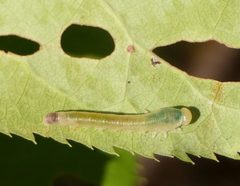
4Blennocampinae is a of within the Tenthredinidae, containing over 100 and approximately 600 described . Members are characterized by larvae that often bear distinctive branched or spines. The subfamily includes species with documented associations with woody plants, particularly oaks (Quercus) and hickories (Carya), as well as some that have become notable urban pests. Larvae possess six or more pairs of , distinguishing them from lepidopteran caterpillars.
Pronunciation
How to pronounce Blennocampinae: /ˌblɛn.oʊˈkæm.pɪni/
These audio files are automatically generated. While they are not always 100% accurate, they are a good starting point.
Identification
Larvae are distinguished from superficially similar lepidopteran caterpillars by having six or more pairs of (vs. five or fewer in Lepidoptera). Within Tenthredinidae, Blennocampinae larvae are often recognized by their branched or spines, though this trait varies among . require examination of wing venation and genitalia for definitive assignment.
Images
Habitat
Diverse including deciduous forests, woodlands, and urban landscapes. Many are associated with woody plants, particularly oaks and hickories. Some species have become established in cultivated and urban settings where their host trees are planted.
Distribution
Widespread in the Northern Hemisphere, with documented occurrences in North America and Europe. Specific records include Alberta, Canada (first recorded 2003 for Eupareophora parca), and throughout the eastern United States.
Seasonality
periods occur during spring and summer, varying by and latitude. Larvae are present during the growing season of their plants.
Diet
Larvae are folivores, feeding on leaves of woody plants. Documented associations include Fraxinus spp. (ash), Quercus spp. (oak), and Carya spp. (hickory). do not feed or feed minimally on nectar or pollen.
Host Associations
- Fraxinus spp. - larval food plantEupareophora parca documented defoliating ash trees in Edmonton
- Quercus spp. - larval food plantPericlista spp. feed on oak foliage
- Carya spp. - larval food plantPericlista spp. feed on hickory foliage
Life Cycle
Holometabolous development with , larval, pupal, and stages. Larvae pass through multiple instars (number and duration documented for some ). typically occurs as or pupae in soil or leaf litter. Adults emerge in spring to early summer.
Behavior
Larvae are external feeders on foliage, often consuming entire leaves or large portions thereof. Some exhibit gregarious feeding in early instars. are short-lived and primarily focused on .
Ecological Role
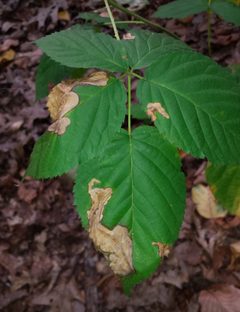
Herbivores that can significantly impact plant through defoliation. Some have shown rapid increases in urban settings, suggesting potential as pests. Larvae serve as food for various and , though specific relationships are poorly documented for most species.
Human Relevance
Some are emerging as urban pests. Eupareophora parca (spiny ash sawfly) showed rapid increase in defoliation severity in Edmonton, Alberta between 2003-2004, with potential to become a significant pest of planted ash trees. Other species may cause minor defoliation of landscape trees.
Similar Taxa
- Other Tenthredinidae subfamiliesSimilar ; distinguished by larval characters (spine structure, associations) and genitalia
- Lepidoptera larvaeSuperficially similar caterpillar-like larvae; distinguished by number of (6+ in Blennocampinae vs. ≤5 in Lepidoptera)
More Details
Taxonomic uncertainty
Wikipedia and iNaturalist provide conflicting estimates of diversity (Wikipedia: >100 , ~600 ; iNaturalist: ~15 genera, ≥20 species). The higher estimate appears more consistent with established taxonomic literature.
Defensive larval structures
The branched spines characteristic of many Blennocampinae larvae are cuticular projections that may serve defensive functions, though their precise role has not been experimentally verified for most .