
Monophadnoides
Ashmead, 1898
raspberry sawfly
Species Guides
3- Monophadnoides osgoodi
- Monophadnoides pauper
- Monophadnoides rubi(raspberry sawfly)
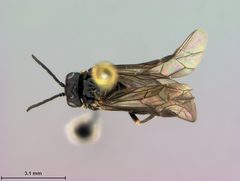
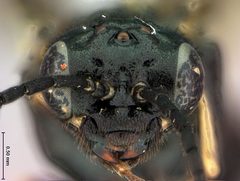
Monophadnoides is a of in the Tenthredinidae, Blennocampinae, containing approximately eight described . The genus was established by Ashmead in 1898. One species, Monophadnoides rubi, is known as the raspberry sawfly and is recognized as an agricultural pest. Sawflies in this genus possess the characteristic saw-shaped ovipositor typical of Tenthredinidae, which females use to insert into plant tissue.

Pronunciation
How to pronounce Monophadnoides: //ˌmɒnəˌfædˈnɔɪdiːz//
These audio files are automatically generated. While they are not always 100% accurate, they are a good starting point.
Identification
Larvae of Monophadnoides can be distinguished from lepidopteran caterpillars by possessing six or more pairs of (false legs behind the three pairs of true legs), whereas caterpillars have at most five pairs. Larvae in this exhibit branched spines, a trait shared with other Blennocampinae. are typical with the serrated ovipositor characteristic of Tenthredinidae.
Images
Distribution
Distribution records exist for Denmark (DK), Norway (NO), and Sweden (SE), though some records are marked as doubtful. within the show varying distributions in North America, with some previously known only from the Appalachian Mountains but subsequently recorded in Arkansas, representing range extensions of hundreds of kilometers.
Diet
Larvae of Monophadnoides rubi feed on raspberry plants (Rubus ). Other species' larval plants are not clearly documented in available sources.
Host Associations
- Rubus - larval plantspecific to Monophadnoides rubi
Human Relevance
Monophadnoides rubi, the raspberry sawfly, is an agricultural pest of raspberry crops. The larvae feed on raspberry foliage, potentially causing economic damage to cultivated berries.
Similar Taxa
- PericlistaBoth belong to Blennocampinae and possess larvae with branched spines; Periclista larvae feed on oak and hickory rather than raspberry
More Details
Taxonomic history
The was described by Ashmead in 1898. -level has been documented by D.R. Smith, with revisions published in USDA Technical Bulletins.
Research significance
Monophadnoides conspiculatus was cited as an example of significant range extension in a 2016 biodiversity survey of Arkansas , having previously been known only from the Appalachian Mountains.