
Aporus
Spinola, 1808
spider wasps
Species Guides
4- Aporus concolor
- Aporus hirsutus(hirsute spider wasp)
- Aporus luxus
- Aporus niger
Aporus is a of small spider wasps in the Pompilidae, containing approximately twelve described . These are specialized that hunt ground-dwelling spiders, particularly those occupying burrows. The genus is distributed across North America, Europe, and Asia. are frequently observed visiting flowers for nectar.

Pronunciation
How to pronounce Aporus: /ˈeɪ.pɒ.rəs/
These audio files are automatically generated. While they are not always 100% accurate, they are a good starting point.
Identification
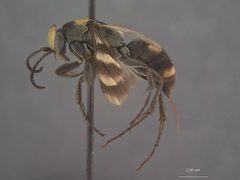
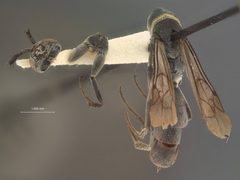
Members of Aporus can be distinguished from other spider wasps by the gradually sloping , which gives a streamlined profile. The legs are proportionately shorter than in other Pompilidae. are relatively short and thick, resembling those of the unrelated Evagetes, but Aporus lacks the blocky thorax characteristic of Evagetes. Body length ranges from 8–15 mm. Many exhibit iridescent blue-black coloration.
Images
Habitat
Found in diverse terrestrial including grasslands, open woodlands, and desert scrub. are commonly associated with flowering plants, particularly umbellifers such as Daucus carota ( Anne's Lace), as well as buckwheat, rabbitbrush, gumweed, spurge, and other nectar sources.
Distribution
Holarctic distribution. In North America, recorded from central British Columbia to central Baja California, eastward to western Idaho, Utah, Arizona, and Colorado. Present in Europe and Asia, including Japan.
Seasonality
active primarily from May through October in temperate regions. In southernmost latitudes, two may occur annually; elsewhere typically .
Diet
Host Associations
- ground-dwelling spiders - prey/ females hunt spiders in their burrows; specifically documented from Aptostichus sp. (Euctenizidae)
Life Cycle
Females deposit a single on a paralyzed spider within the spider's own burrow, which serves as the nest. The larva feeds on the immobilized . Typically one per year; two generations in southern regions. Larval development details are poorly documented.
Behavior
females sting ground-dwelling spiders into paralysis and utilize the spider's burrow as a nest site. Adults are constantly active and alert when foraging on flowers. Males have been reared from spider , indicating they do not construct nests.
Ecological Role
of ground-dwelling spiders, potentially regulating spider . contribute to pollination while foraging for nectar.
Human Relevance
Not of direct economic importance. Occasionally encountered by naturalists and photographers at flowers. One , Aporus luxus, is among the more commonly observed spider wasps in parts of western North America.
Similar Taxa
- EvagetesShares short, thick with Aporus, but distinguished by blockier and different overall proportions.
- other PompilidaeAporus have proportionately shorter legs and more streamlined thoracic profile than most spider wasps.
Sources and further reading
- BugGuide
- Wikipedia
- GBIF taxonomy match
- iNaturalist taxon
- NCBI Taxonomy
- Catalogue of Life
- Bug Eric: A Spider Wasp, Aporus luxus
- Behavior of the Catarina Pupfish (Cyprinodontidae:Megupsilon aporus), a Severely Imperiled Species
- The extinction of the Catarina pupfish Megupsilon aporus and the implications for the conservation of freshwater fish in Mexico