
Euctenizidae
Raven, 1985
Wafer-lid Trapdoor Spiders
Genus Guides
7- Apomastus
- Aptostichus
- Entychides
- Eucteniza
- Myrmekiaphila(Ant-loving trapdoor spiders)
- Neoapachella
- Promyrmekiaphila
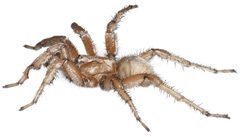
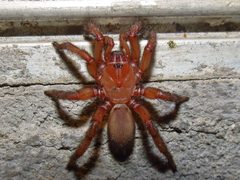
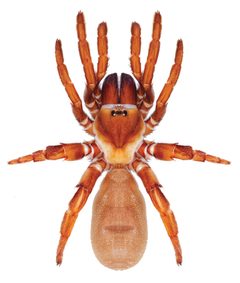
Euctenizidae is a of mygalomorph spiders elevated from status in 2012. The family contains approximately 79 described across eight , including Aptostichus, Myrmekiaphila, and Promyrmekiaphila. Members are characterized by their lifestyle and construction of silk-lined burrows with distinctive trapdoors. The family is now considered more closely related to Idiopidae than to other trapdoor spider families.
Pronunciation
How to pronounce Euctenizidae: //juːkˈtɛnɪzɪˌdeɪ//
These audio files are automatically generated. While they are not always 100% accurate, they are a good starting point.
Identification
Distinguished from other mygalomorph by a combination of morphological traits including the comb-like rastellum (row of stiff spines on the ), though specific diagnostic features vary by . The family was historically confused with Ctenizidae and Cyrtaucheniidae. -level identification often requires genetic analysis due to morphological conservatism; somatic characters such as shape, coloration, chaetotaxy, and arrangement show little variation even between distantly related .
Images
Habitat
; construct deep, silk-lined subterranean burrows. Many build wafer-like trapdoors, while others construct cork-like doors. Burrows are typically excavated in stable substrates and camouflaged with local materials. Coastal dune species occupy specific zones between primary and secondary dune crests where vegetation structure and microclimate are stable and flooding risk is minimized.
Distribution
to North America, occurring almost exclusively in the United States and Mexico. Widespread across the continental United States with particular diversity in the California Floristic Province. Some show restricted distributions; for example, Cryptocteniza is known from a single location in Monterey County, California.
Life Cycle
Long-lived; individuals excavate burrows as early instars and may inhabit the same burrow for their entire lifespan. The oldest known trapdoor spider was 40 years old. Development is slow and times are extended compared to most spiders.
Behavior
Construct silk-lined burrows with camouflaged trapdoors made of soil, vegetation, and silk. Trapdoors may be wafer-like or cork-like depending on . Low vagility and extreme site fidelity result in microgeographic structuring. Extremely sensitive to degradation due to limited ability.
Human Relevance
Subject of active research in and conservation . Several are of conservation concern due to restricted ranges and specificity. The discovery of new species, including the 'endangered living fossil' Cryptocteniza kawtak, has generated public engagement through citizen science naming contests. Research on this has contributed to understanding of cryptic species, phylogeography, and biodiversity hotspot conservation.
Similar Taxa
- CtenizidaeHistorically confused with Euctenizidae; both contain trapdoor spiders with rastella, but Euctenizidae is now placed in a separate lineage more closely related to Idiopidae
- CyrtaucheniidaeEuctenizidae was originally described as a of Cyrtaucheniidae before elevation to rank in 2012
- HalonoproctidaeAnother of trapdoor spiders with which Euctenizidae shares ecological similarities; both construct burrows with trapdoors but differ in phylogenetic placement and morphological details
More Details
Taxonomic History
Originally described as Euctenizinae within Cyrtaucheniidae by Robert Raven in 1985. Elevated to rank by Bond et al. in 2012 based on phylogenomic evidence. Now recognized as sister to Idiopidae rather than to other traditional 'trapdoor spider' families.
Conservation Significance
Several meet criteria for conservation concern due to narrow distributions and specificity. Cryptocteniza kawtak is classified as an 'Endangered Living Fossil' with a distribution restricted to a single beach in Monterey County. Coastal dune endemics threats from erosion, human development, habitat fragmentation, coastal squeeze, and sea level rise.
Research Importance
Euctenizidae has become a model group for studying cryptic , speciation patterns, and phylogeography in mygalomorph spiders. Genomic approaches including ultraconserved elements and anchored hybrid enrichment have revealed substantial undescribed diversity. The exemplifies challenges in species delimitation when is conserved but genetics show deep divergence.
Sources and further reading
- BugGuide
- Wikipedia
- GBIF taxonomy match
- iNaturalist taxon
- NCBI Taxonomy
- Catalogue of Life
- UC Davis Professor Jason Bond Publishes Trapdoor Spider Research (And Appears on TV) | Bug Squad
- Name That Spider! | Bug Squad
- For the Love of Spiders and Research | Bug Squad
- Arachnids: Close Encounters of the Best Kind | Bug Squad
- Searching the California Floristic Province for Trapdoor Spiders | Bug Squad
- Name That Spider--And Did They Ever! | Bug Squad
- Speciation Pattern and Process in the California Coastal Dune Endemic Trapdoor Spider Aptostichus simus (Mygalomorphae: Euctenizidae) and Description of a New Cryptic Species
- Phylogeny, Evolution, and Biogeography of the North American Trapdoor Spider Family Euctenizidae (Araneae: Mygalomorphae) and the Discovery of a New ‘Endangered Living Fossil’ Along California’s Central Coast
- Microgeographic population structuring in a genus of California trapdoor spiders and discovery of an enigmatic new species (Euctenizidae: Promyrmekiaphila korematsui sp. nov.).
- Phylogeography and cohesion species delimitation of California endemic trapdoor spiders within the Aptostichus icenoglei sibling species complex (Araneae: Mygalomorphae: Euctenizidae).