
Evagetes
Lepeletier, 1845
Species Guides
5Evagetes is a of kleptoparasitic spider wasps in the Pompilidae, containing 72 described . Unlike most spider wasps that hunt spiders directly, Evagetes species parasitize the nests of other pompilid wasps by entering sealed burrows, consuming the , and replacing it with their own. The genus is primarily distributed in the Palaearctic region (58 species), with 11 species in the Nearctic region and limited representation in other biogeographic realms. Evagetes is distinguished from related genera by its notably short .
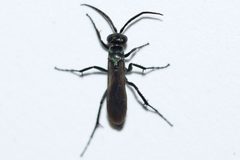
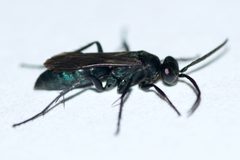
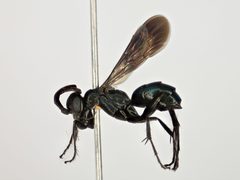
Pronunciation
How to pronounce Evagetes: /ˈɛvəˌd͡ʒiːtiːz/
These audio files are automatically generated. While they are not always 100% accurate, they are a good starting point.
Identification
The combination of very short and a blocky distinguishes Evagetes from other short-antennaed spider wasps such as Aporus, which has a more streamlined, gradually sloping thorax. The kleptoparasitic lifestyle and association with burrows of other pompilid (Arachnospila, Anoplius, Episyron, Pompilus) provides ecological context for identification. Metallic bluish coloration occurs in several but is not universal.
Images
Appearance
Evagetes are characterized by very short , a trait that distinguishes them from most other spider wasps. Most are black with the base of the antennae (reddish-brown). Several species exhibit metallic bluish coloration. The has a blockier, less streamlined appearance compared to the unrelated Aporus, which also has short antennae. Body size and detailed morphological features vary among the 72 described species.
Habitat
include areas with shrubs and exposed soil suitable for burrowing by pompilid wasps. Males have been observed patrolling among shrubs in locations where females dig in soil. Specific microhabitat requirements relate to the nesting sites of host rather than direct spider hunting grounds.
Distribution
The contains 72 described with strong Palaearctic dominance (58 species). The Nearctic region holds 11 species. Limited penetration occurs into the Afrotropical, Oriental, and Neotropical regions. Distribution records from GBIF include Denmark, Norway, and Sweden.
Seasonality
Activity periods correspond to those of pompilid . Specific seasonal data is sparse at the level; individual species likely vary by latitude and local climate.
Host Associations
- Arachnospila - kleptoparasiteEvagetes digs into sealed burrows and replaces with its own
- Anoplius - kleptoparasiteEvagetes digs into sealed burrows and replaces with its own
- Episyron - kleptoparasiteEvagetes digs into sealed burrows and replaces with its own
- Pompilus - kleptoparasiteEvagetes digs into sealed burrows and replaces with its own
Behavior
Males of E. subangulatus have been observed patrolling primarily among shrubs in areas where females dig in soil. Marked males remained detectable for up to 16 days and shared a home range of approximately 400 m³ without exhibiting territoriality. Males chased and pounced upon both males and females, including unmarked individuals. This non-territorial patrolling with intraspecific chasing appears characteristic of at least some in the .
Ecological Role
As kleptoparasites, Evagetes function as secondary consumers within spider wasp , potentially regulating of primary spider-hunting pompilids. This parasitic relationship represents a derived ecological strategy within the Pompilidae, shifting from direct to nest exploitation.
Similar Taxa
More Details
Taxonomic history
The type was originally named Evagetes bicolor by Lepeletier in 1845, but this has since been synonymized with E. dubius.
Research limitations
Most detailed behavioral studies focus on single (E. subangulatus); -level generalizations for , , and seasonality remain limited. The larval and complete life cycle of Evagetes species have not been fully documented.