
Anoplius depressipes
Banks, 1919
Anoplius depressipes is a spider wasp in the Pompilidae, notable for its specialized hunting of fishing spiders in the Dolomedes. The exhibits remarkable aquatic adaptations, including the ability to walk on water and dive underwater for several minutes to capture prey that attempts to escape beneath the surface. This represents a striking example of -prey with semi-aquatic spiders.
Pronunciation
How to pronounce Anoplius depressipes: /əˈnoʊpliəs dɪˈprɛsɪpiːz/
These audio files are automatically generated. While they are not always 100% accurate, they are a good starting point.
Identification
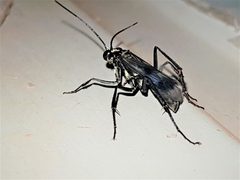
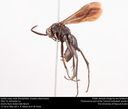
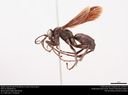
Distinguished from other spider wasps by its association with aquatic and documented of pursuing spiders underwater. Most Anoplius are black or blue-black with limited distinguishing field marks; positive identification requires microscopic examination. Similar in general form to other Pompilidae but provides the primary distinguishing characteristic.
Images
Habitat
Aquatic and semi-aquatic environments including ponds, lakes, and quiet river backwaters where fishing spiders (Dolomedes) occur. Associated with emergent vegetation and floating objects in still water.
Distribution
North America; specific range details not documented in available sources.
Diet
of fishing spiders in the Dolomedes ( Pisauridae). Has been observed capturing spiders that retreat underwater to escape.
Host Associations
- Dolomedes triton - preySix-spotted Fishing Spider, known to dive underwater to escape this
- Dolomedes - prey of fishing spiders, semi-aquatic prey
Life Cycle
Solitary with typical pompilid : female paralyzes spider prey, transports to burrow, lays single on paralyzed , and seals burrow. Larva consumes the living but paralyzed spider.
Behavior
Highly adept at on water surface. Capable of submerging for several minutes to sting and extract spiders hiding underwater. This underwater hunting is exceptional among spider wasps.
Ecological Role
of large semi-aquatic spiders; control of fishing spiders. Contributes to aquatic-terrestrial connections.
Similar Taxa
- Anoplius aethiopsSimilar large black spider wasp, but hunts terrestrial wolf spiders (Lycosidae) rather than aquatic spiders
- Anoplius cleoraClosely related and morphologically similar; requires microscopic examination to distinguish
- Other Anoplius speciesMost are black or blue-black with limited external differences; and prey type are key distinguishing factors
More Details
Aquatic Adaptations
The 's ability to walk on water and dive after prey represents a specialized rare among spider wasps. The fishing spider Dolomedes triton has been documented diving to escape this , using trapped air on body hairs to breathe underwater temporarily.
Predator-Prey Dynamics
This exemplifies an evolutionary arms race with its spider prey: the spider's diving escape is countered by the 's ability to follow underwater, while the spider's surface-wave detection abilities help it detect approaching wasps.
Sources and further reading
- BugGuide
- Wikipedia
- GBIF taxonomy match
- iNaturalist taxon
- Catalogue of Life
- Bug Eric: Spider Sunday: Six-spotted Fishing Spider
- Bug Eric: Wasp Wednesday: Anoplius aethiops
- Bug Eric: Wasp Wednesday: Anoplius
- Bug Eric: Wasp Wednesday: Stizoides renicinctus
- Bug Eric: Spider Sunday: Beach Wolf Spider
- Bug Eric: Moving, Again