
Timulla barbigera
velvet ant
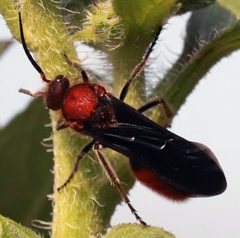
Timulla barbigera is a of velvet ant in the Mutillidae. Velvet ants are actually wingless , with females being entirely wingless and males possessing wings. The Timulla is frequently imitated by ground spiders in the genus Sergiolus, which share similar coloration and preferences. These insects are known for their potent sting and are often encountered in sun-dappled forest floor habitats.
Pronunciation
How to pronounce Timulla barbigera: /tɪˈmʊlə bɑːˈbɪɡərə/
These audio files are automatically generated. While they are not always 100% accurate, they are a good starting point.
Identification
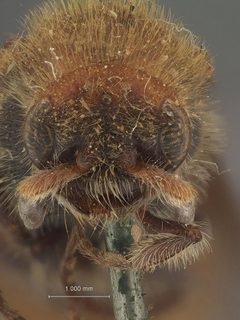
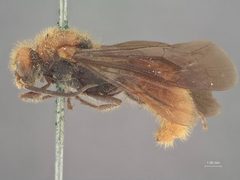
Females are wingless with a robust, -like appearance and dense, velvety . Males possess wings and differ substantially in appearance from females. The Timulla is distinguished from similar mutillid genera by specific morphological features, though precise diagnostic characters for T. barbigera specifically are not detailed in available sources. The shares with mimetic spiders in the genus Sergiolus, particularly S. capulatus, which bears an uncanny resemblance in coloration and pattern.
Images
Habitat
Distribution
North America. Specific range details for T. barbigera are not documented in available sources, though the Timulla occurs in regions where Sergiolus capulatus is found from Nebraska and Oklahoma eastward.
Ecological Role
Serves as a model for by ground spiders (Sergiolus), which gain protection from by resembling these stinging insects.
Human Relevance
Females possess a potent sting, making them noteworthy for human encounters. Frequently mistaken for ants due to their wingless condition and running .
Similar Taxa
- Sergiolus capulatusSpider that exhibits striking visual mimicry of Timulla velvet ants, sharing similar (sun-dappled deciduous forest floor) and coloration pattern.