
Cephalciinae
Genus Guides
2- Acantholyda(web-spinning sawflies)
- Cephalcia(spruce web-spinning sawflies)
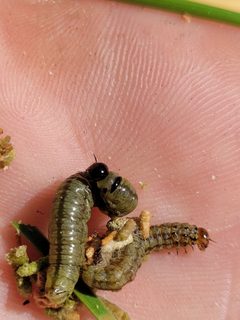
Cephalciinae is a of within the Pamphiliidae. Members are characterized by their association with conifers, particularly as larvae that feed on pine needles. The subfamily includes the Cephalcia, which contains known as pine sawflies. are generally robust with broad relative to body size.
Pronunciation
How to pronounce Cephalciinae: //ˌsɛf.ælˈsiː.ɪˌneɪ//
These audio files are automatically generated. While they are not always 100% accurate, they are a good starting point.
Identification
Cephalciinae can be distinguished from the other of Pamphiliidae, Pamphiliinae, by plant association: Cephalciinae are on conifers (Pinaceae), while Pamphiliinae feed on broadleaf trees and shrubs. have a relatively broad, flattened compared to many other groups. Larvae possess on all abdominal segments, a trait shared with other Pamphiliidae but differing from most Tenthredinidae sawflies.
Images
Habitat
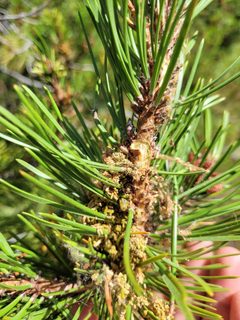
Associated with coniferous forests and plantations, particularly those containing pine (Pinus) . Larvae occur on trees; are found in wooded areas where hosts are present.
Distribution
Primarily distributed across the Northern Hemisphere in regions with native or cultivated conifers, including North America, Europe, and Asia.
Diet
Larvae feed on needles of conifers, especially pines (Pinus spp.). Specific associations vary by .
Host Associations
- Pinus - larval food plantprimary
Life Cycle
Complete with , larval, pupal, and stages. Larvae are external feeders on pine needles. occurs in soil or leaf litter. Some exhibit periodic with high densities.
Behavior
Larvae feed gregariously on pine needles, sometimes causing significant defoliation during years. are not known to feed.
Ecological Role
Herbivores that can function as pests in managed pine forests and plantations during . Contribute to nutrient cycling through defoliation and subsequent needle fall.
Human Relevance
Several , particularly in the Cephalcia, are forest pests of economic concern. can cause substantial defoliation of pine trees, reducing growth rates and timber quality. Some species are subject to monitoring and control efforts in commercial forestry.
Similar Taxa
- PamphiliinaeOther of Pamphiliidae; distinguished by plant (broadleaf trees vs. conifers) and often by shape in .
- Diprionidae of conifer-feeding ; distinguished by larval (Diprionidae larvae have fewer and different capsule structure) and .