
Osmia clarescens
Cockerell, 1911
Osmia clarescens is a solitary in the Megachilidae, described by Theodore Dru Alison Cockerell in 1911. The occurs in Central America and North America. Like other members of the Osmia, it is a cavity-nesting that constructs nests in hollow stems or pre-existing holes, sealing chambers with mud. Specific ecological details and distinguishing characteristics remain poorly documented in the scientific literature.
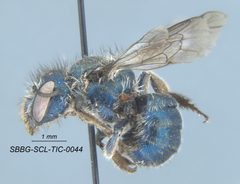
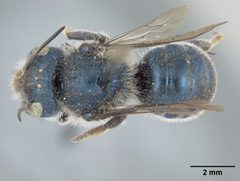
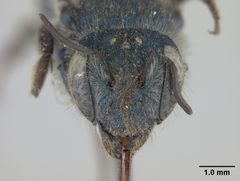
Pronunciation
How to pronounce Osmia clarescens: //ˈɒz.mi.ə kləˈrɛs.ɛnz//
These audio files are automatically generated. While they are not always 100% accurate, they are a good starting point.
Images
Distribution
Central America and North America; specific country records are sparse in the available sources.
Similar Taxa
- Osmia lignariaBoth are North American Osmia , but O. lignaria is well-studied as a commercial orchard with documented blue-black coloration and specific management protocols, whereas O. clarescens lacks comparable research attention.
- Osmia cornifronsAnother commercially utilized Osmia in North America, distinguished from O. clarescens by its documented hornfaced appearance and intentional introduction history for orchard pollination services.
Sources and further reading
- BugGuide
- Wikipedia
- GBIF taxonomy match
- iNaturalist taxon
- NCBI Taxonomy
- Catalogue of Life
- Sharing Research About BOB | Bug Squad
- Welcome mason bees, Osmia spp. — Bug of the Week
- Mason bees make their belated debut, Osmia spp. — Bug of the Week
- Is This Non-Native Mason Bee an Invasive Species?
- European Mason Bee Lands in North America's Pacific Northwest, Likely to Spread
- Mason bees make an early debut, Osmia spp. — Bug of the Week