Megachile melanophaea
Smith, 1853
Black-and-gray Leafcutter Bee
Megachile melanophaea is a solitary leafcutter bee native to North America, first described by Frederick Smith in 1853. Females construct nests in ground holes or small cavities, lining individual with carefully cut leaf pieces and provisioning them with pollen and nectar. This has been documented as a of slipper orchids (Cypripedium species), including the rare Cypripedium macranthos var. rebunense, which is otherwise pollinated almost exclusively by bumble bees. The species is parasitized by cuckoo bees Coelioxys sodalis and Coelioxys rufitarsus.
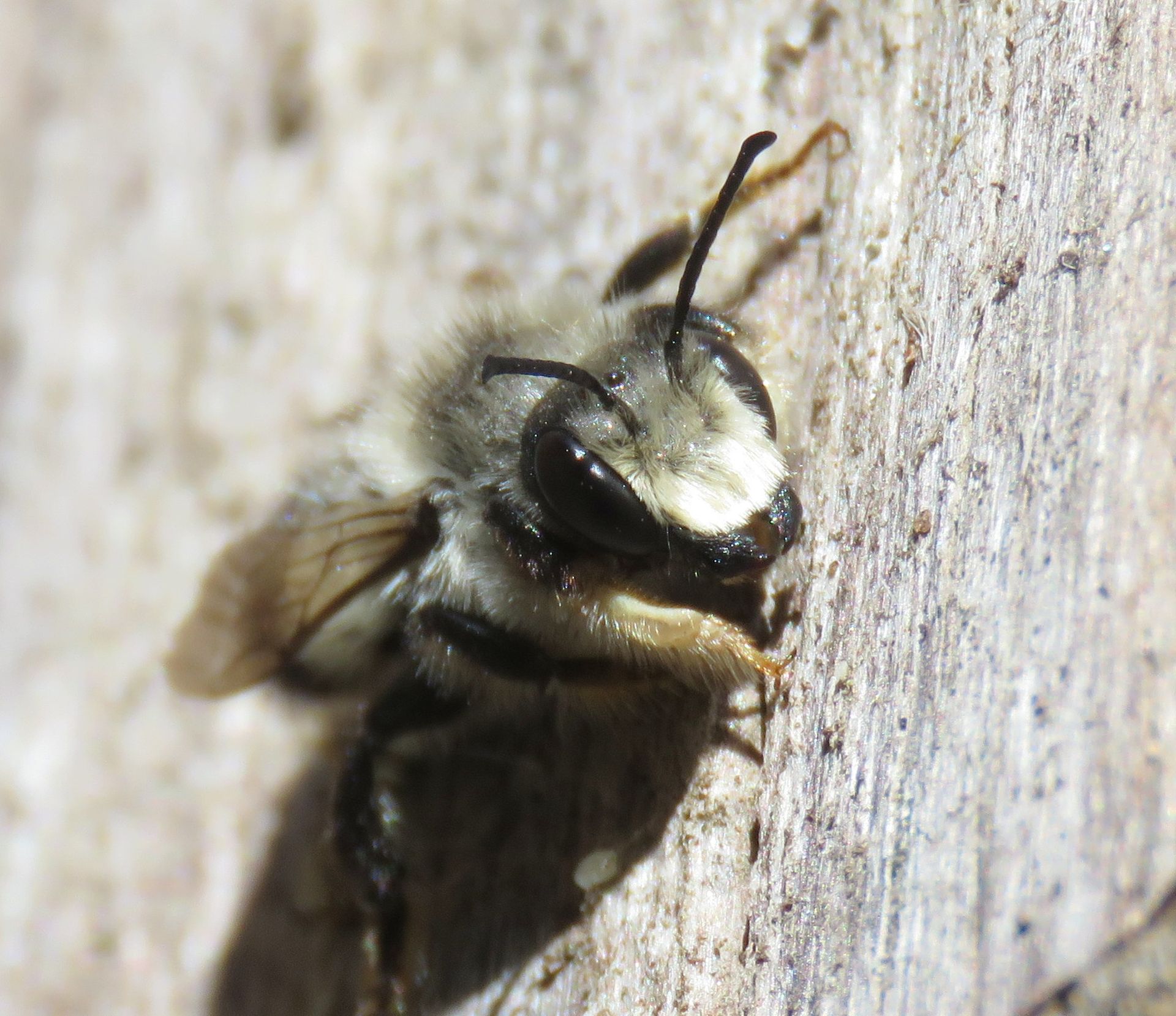
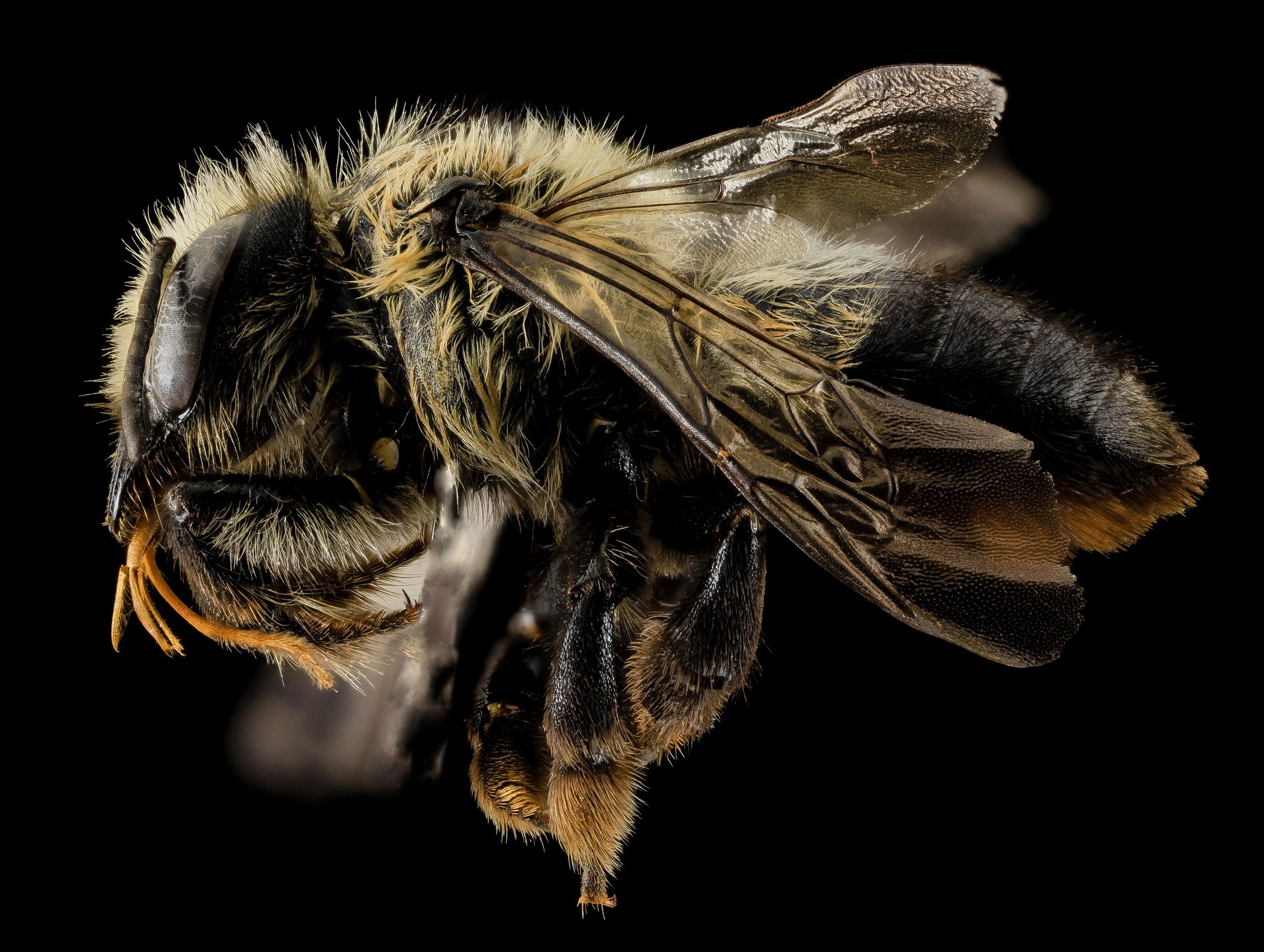
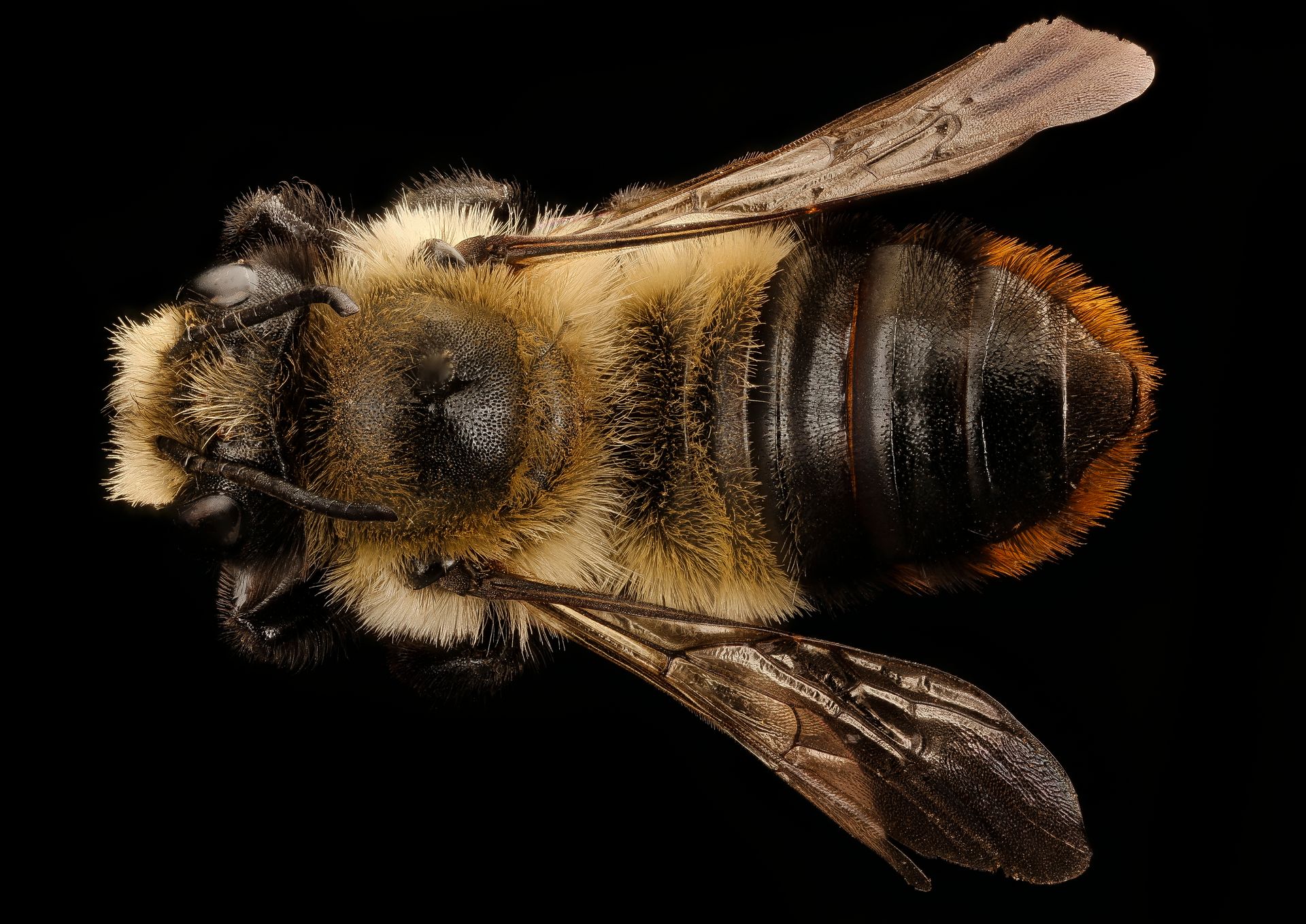
Pronunciation
How to pronounce Megachile melanophaea: //ˌmɛɡəˈkaɪli ˌmɛləˈnoʊfiə//
These audio files are automatically generated. While they are not always 100% accurate, they are a good starting point.
Identification
Distinguished from other Megachile by the combination of black with mixed pale and dark , yellowish-white thoracic hairs dorsally contrasting with dark hairs, and reddish-brown scopal hairs. The abdominal pattern of pale hairs on and black hairs on terga is distinctive. Similar may share leafcutting but differ in pubescence coloration and pattern; examination of scopa color and abdominal hair pattern aids identification.
Images
Appearance
Females measure 12–14 mm in length; males are smaller at 9–12 mm. The is black with brownish-black hairs, except for yellowish-white hairs around the lower and antennal bases. The is densely pubescent with yellowish-white hairs dorsally and laterally, and brownish-black hairs ventrally and on the legs. Wings are translucent with brownish-black . The first two abdominal bear erect pale hairs; terga have erect black hairs. The scopa (pollen-carrying structure) has reddish-brown hairs.
Habitat
Nests in pre-existing cavities including ground holes, borings in wood, and other small hollows. Requires access to soft leaves or flower petals for nest construction and diverse flowering plants for forage. Found in varied landscapes from lowlands to higher elevations (observed above 8,000 ft in Colorado).
Distribution
Native to North America, ranging from Nova Scotia eastward across Canada to British Columbia and Alaska. Present throughout the northern United States and Canada.
Seasonality
active during summer months; in Colorado observed in late June and July. Activity coincides with availability of soft leaves for nest construction and flowering plants for forage.
Diet
feed on nectar; females collect pollen to provision nest . Specific plants include slipper orchids (Cypripedium macranthos var. rebunense, Cypripedium reginae) and likely diverse other flowering plants.
Life Cycle
Solitary; each female constructs and provisions her own nest. Nest are lined with oval leaf pieces cut from soft leaves or petals, capped with circular leaf pieces. Each cell contains a pollen-nectar ball and a single . Larvae develop on the provisioned food mass. Parasitized by cleptoparasitic cuckoo bees Coelioxys sodalis and Coelioxys rufitarsus, which lay eggs in cells.
Behavior
Females cut precise oval and circular pieces from leaves and petals to construct nest , carrying these fragments in to nest sites. Has been observed pollinating Cypripedium macranthos var. rebunense, a role typically filled by bumble bees, and contributes to pollination of some Cypripedium reginae .
Ecological Role
of native plants including specialized orchids; contributes to plant reproductive success in where it occurs. Serves as for cleptoparasitic bees, supporting higher .
Human Relevance
Contributes to pollination of native flora; leaf-cutting activity may cause minor cosmetic damage to garden plants including roses, though this is generally insignificant. Potential candidate for conservation attention given documented role in orchid pollination.
Similar Taxa
- Other Megachile speciesShare leafcutting and general body form; distinguished by specific patterns, scopa coloration, and abdominal hair arrangement.
- Coelioxys sodalis / C. rufitarsusThese cuckoo bees parasitize M. melanophaea nests; females can be distinguished by pointed adapted for -laying in , and lack of scopa.
More Details
Orchid Pollination
Megachile melanophaea has been documented as an unusual of slipper orchids. It is one of few recorded pollinators of Cypripedium macranthos var. rebunense, which is otherwise almost exclusively pollinated by bumble bees. Some of Cypripedium reginae are pollinated by this while others are pollinated by the hoverfly Syrphus torvus, representing a rare dual-pollinator system.
Nesting Behavior
Unlike some leafcutter bees that nest exclusively in wood or stems, M. melanophaea uses diverse cavity types including ground holes, demonstrating flexible nesting within the .
Sources and further reading
- BugGuide
- Wikipedia
- GBIF taxonomy match
- iNaturalist taxon
- NCBI Taxonomy
- Catalogue of Life
- Looking for Cheap Urban Real Estate | Bug Squad
- In Search of the World's Biggest Bee: How It Came to 'Bee' | Bug Squad
- Photographer Allan Jones Exudes Patience, Skill and Talent | Bug Squad
- The Most Incredible Image of a Leafcutter Bee | Bug Squad
- Bug Eric: A Beautiful Place to "Bee"
- Mailbox posts are fine homes for giant resin bees, Megachile sculpturalis — Bug of the Week