
Megachile brevis
Say, 1837
leafcutter bee
Megachile brevis is a of leafcutter in the Megachilidae, first described by Thomas Say in 1837. As a member of the Megachile, it shares the characteristic of cutting leaves or petals to line its nest cavities. The species occurs in North America and Middle America according to distribution records. Like other leafcutter bees, it is a solitary nester and contributes to pollination services in its range.
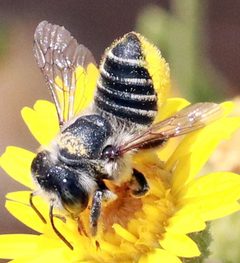
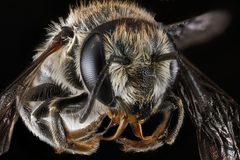
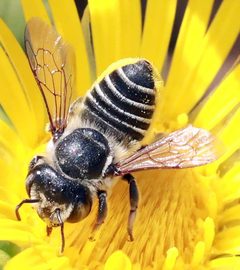
Pronunciation
How to pronounce Megachile brevis: /ˌmɛɡəˈkaɪli ˈbrɛvɪs/
These audio files are automatically generated. While they are not always 100% accurate, they are a good starting point.
Images
Distribution
North America; Middle America
Ecological Role
As a member of Megachilidae, Megachile brevis functions as a in its . Leafcutter bees are known to be effective pollinators of various flowering plants, often carrying pollen on the scopa located on the underside of the rather than on the legs.
Similar Taxa
- Megachile fidelisBoth are North American leafcutter bees in the same , distinguished by specific morphological features and geographic range
- Megachile plutoAnother Megachile , though dramatically different in size; M. pluto is the world's largest while M. brevis is of typical leafcutter bee dimensions
Sources and further reading
- BugGuide
- Wikipedia
- GBIF taxonomy match
- iNaturalist taxon
- NCBI Taxonomy
- Catalogue of Life
- Looking for Cheap Urban Real Estate | Bug Squad
- In Search of the World's Biggest Bee: How It Came to 'Bee' | Bug Squad
- Photographer Allan Jones Exudes Patience, Skill and Talent | Bug Squad
- Name That Bug! | Bug Squad
- The Most Incredible Image of a Leafcutter Bee | Bug Squad
- new species | Blog - Part 3