
Tersilochinae
Genus Guides
4Tersilochinae is a worldwide of parasitic within Ichneumonidae, comprising approximately 500 across 24 . Members are koinobiont endoparasitoids that develop within living larvae, primarily attacking Coleoptera including economically significant such as Curculionidae and Chrysomelidae. This host specificity has led to their use in programs. The subfamily exhibits broad geographic distribution with documented records from the Palearctic, Nearctic, Afrotropical, Neotropical, and Australasian regions.
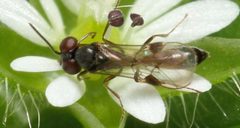
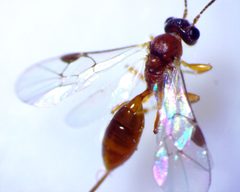
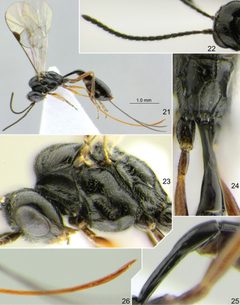
Pronunciation
How to pronounce Tersilochinae: //ˌtɛrsɪˈloʊkɪniː//
These audio files are automatically generated. While they are not always 100% accurate, they are a good starting point.
Identification
Tersilochinae can be distinguished from other ichneumonid by combination of the following features: fore wing with first and second abscissae of meeting at right angle in many ; presence of a distinct pterostigma; and relatively slender body form with reduced wing venation compared to more derived ichneumonid groups. Specific identification requires examination of wing venation patterns, structure, and ovipositor , with modern keys available for regional faunas including Western Amazonia and Finland.
Images
Habitat
Occurs in diverse terrestrial spanning temperate to tropical zones. have been recorded from prairies and bushes at elevations exceeding 3,400 meters, as well as lowland tropical rainforests and temperate forests. Habitat associations are primarily determined by distribution rather than specific vegetation types.
Distribution
Worldwide distribution. Documented from: Palearctic region (Europe including Finland, Italy, Russia; Asia including China, Yemen); Nearctic region; Afrotropical region (Benin, Côte d'Ivoire, Ethiopia, Mozambique, Niger, Nigeria, Sierra Leone, Togo, Uganda, Zambia); Neotropical region (Mexico, Guatemala, Ecuador, Peru, Brazil, Paraguay); and Australasian region (New Zealand). The has been recorded from all major biogeographic regions.
Seasonality
have been observed on flowers during spring in temperate regions. Activity patterns likely vary by latitude and availability.
Host Associations
- Coleoptera larvae - primary koinobiont endoparasitoid
- Curculionidae - weevil larvae; used for
- Chrysomelidae - leaf beetle larvae; used for
- Symphyta larvae - larvae; recorded for one only
Life Cycle
Koinobiont endoparasitoid development: females oviposit into living larvae, and larvae develop internally while host continues feeding and growing. Host is killed when wasp larvae complete feeding and emerge to pupate. Specific details of , larval instars, and pupal duration vary by and are not comprehensively documented.
Ecological Role
As koinobiont endoparasitoids of larvae, Tersilochinae function as significant mortality agents for herbivorous Coleoptera . Their role in regulating weevil and leaf beetle populations contributes to natural biocontrol in both native and agricultural settings.
Human Relevance
Used in programs targeting pest Coleoptera, particularly Curculionidae (weevils) and Chrysomelidae (leaf beetles). The 's specificity to makes them valuable candidates for targeted pest management in orchards and forests.
Similar Taxa
- CremastinaeAlso ichneumonid with reduced wing venation and lifestyle; distinguished by different fore wing venation patterns and typically idiobiont rather than koinobiont development
- PhrudinaeHistorically allied within Ichneumonidae; separated by differences in structure and ovipositor
- Microgastrinae (Braconidae)Similar koinobiont endoparasitoid strategy and size range; distinguished by -level characters including fore wing venation with closed and different antennal structure
More Details
Taxonomic History
The has undergone significant revision in recent decades, with numerous new described including Palpator (2006), Zealochus (2004), Australochus (2004), Megalochus (2013), and Labilochus (2017). Modern taxonomic work has emphasized the use of interactive identification keys and molecular data to address the subfamily's diversity.
Species Discovery
Recent descriptions include Stethantyx covida (named during 2020 COVID-19 pandemic), Barycnemis finnora from Finland, and multiple Stethantyx from Western Amazonia. The remains actively studied with new species regularly described from under-sampled regions.
Sources and further reading
- BugGuide
- Wikipedia
- iNaturalist taxon
- NCBI Taxonomy
- wasps | Blog - Part 2
- New records of Afrotropical Tersilochinae (Hymenoptera: Ichneumonidae)
- A review of Tersilochinae (Hymenoptera: Ichneumonidae) of Finland. Part 1: taxonomy
- Tersilochinae of Western Amazonia (Hymenoptera: Ichneumonidae). Genus Stethantyx Townes, part 2
- New tersilochines from the collection of Natural History Museum, London (Hymenoptera: Ichneumonidae, Tersilochinae)
- Updated list of Tersilochinae (Hymenoptera, Ichneumonidae) of Italy.