
Stethantyx
Townes, 1971
Species Guides
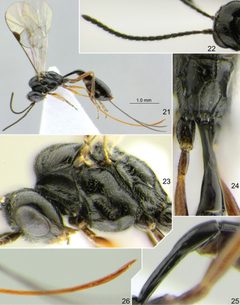
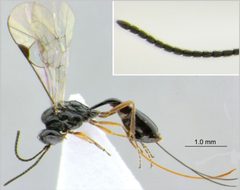
1Stethantyx is a of small in the Ichneumonidae, Tersilochinae. in this genus are found in the Neotropical region, with documented records from Mexico through Central America and into South America, including the Western Amazonia region of Ecuador and Peru. The genus was established by Townes in 1971. Species are characterized by specific wing venation patterns, including the first and second abscissae of the meeting at a right angle in some species.
Pronunciation
How to pronounce Stethantyx: //stɛˈθæn.tɪks//
These audio files are automatically generated. While they are not always 100% accurate, they are a good starting point.
Identification
Members of Stethantyx can be distinguished from other Tersilochinae by wing venation characteristics, particularly the arrangement of the fore wing radial . Some exhibit a right-angled meeting of the first and second abscissae of the . The genus is part of the Tersilochinae, a whose members are generally small with slender bodies and relatively long, slender ovipositors in females.
Images
Habitat
Forested environments in the Neotropics. have been collected in montane and lowland tropical forests, including areas in Central Sulawesi at elevations of 1900–2000 meters. The appears associated with forest where their occur.
Distribution
Mexico (including Tamaulipas and six other states), Guatemala, Ecuador, Peru, and broader Western Amazonia region. Records include first South American documentation for some previously known only from Central America.
Ecological Role
. As members of the Tersilochinae, in this function as parasitoids, though specific records for Stethantyx are not documented in the available sources. Related tersilochines are known to parasitize larvae of beetles (Coleoptera) and ().
Similar Taxa
- MeggoleusBoth are Tersilochinae found in Mexico; distinguished by morphological characters and wing venation patterns.
- PhradisAnother Tersilochinae occurring in the same region; differs in structural features of the , mesosoma, and wing venation.